LOI template: a 2026 guide for business professionals


A Letter of Intent (LOI) template is a structured document that outlines the preliminary terms of a business deal, clearly separating which provisions are legally binding from those that remain open for negotiation. Getting this distinction wrong is the most common reason deals stall or end in litigation. The landmark case Quake Construction v. American Airlines (1990) established that binding vs. non-binding language in an LOI carries real legal weight. A well-built loi template protects both parties, sets a clear negotiation framework, and accelerates the path to a definitive agreement.
1. Key components every LOI template must include
A legally effective letter of intent divides its content into two distinct zones: binding provisions and non-binding provisions. Practitioners recommend bifurcating these zones explicitly, with binding coverage for confidentiality, exclusivity, and governing law, while transaction terms remain non-binding until a definitive agreement is signed.
Binding clauses to include:
- Confidentiality. Protects sensitive information shared during due diligence.
- Exclusivity (no-shop period). Prevents the seller from soliciting competing offers during negotiations.
- Governing law and dispute resolution. Governing law provisions establish jurisdiction and set expectations for resolving disagreements early.
- Expense allocation. Defines who pays deal costs if the transaction fails.
Non-binding clauses to include:
- Proposed purchase price and deal structure.
- Conditions precedent such as regulatory approvals, financing contingencies, and third-party consents.
- Representations and warranties framework.
- Timeline for completing the definitive agreement.
Due diligence provisions deserve their own section. Detailing the due diligence period's scope, access rights, timelines, and extension rights protects both parties and creates a clear roadmap to closing. Without these details, one party can drag the process indefinitely.
Termination clauses define when either party can walk away without penalty. Termination clauses are essential to allow exits if material adverse changes occur or deadlines are missed. Omitting them leaves parties stuck in unproductive negotiations with no legal exit.

Pro Tip: Label every clause explicitly as "binding" or "non-binding" directly in the document. Courts have treated ambiguous LOIs as enforceable contracts, so clear labeling is your first line of defense.
2. How to customize your LOI for different transaction types
A generic letter of intent sample rarely fits a specific deal without modification. Industry-specific LOI adjustments are necessary because generic templates miss nuances like pricing adjustments and non-compete clauses that are critical in technology deals.
The customization approach varies by transaction type:
- Asset purchase. Specify which assets transfer, include representations about title and liens, and address employee transition terms.
- Stock purchase. Add representations about capitalization, outstanding options, and shareholder consent requirements.
- Merger. Include board approval conditions, regulatory filing timelines, and material adverse change definitions.
- Joint venture. Define governance structure, capital contribution schedules, and exit mechanisms for each partner.
- Licensing deal. Specify exclusivity scope, royalty rate ranges, territory, and sublicensing rights.
- SaaS or technology acquisition. Address IP ownership, software escrow, data privacy obligations, and customer contract assignments. Formable's SaaS CPM calculator can help quantify deal economics before finalizing LOI terms.
For technology deals specifically, non-compete and non-solicitation clauses require careful scoping. A clause that is too broad may be unenforceable under state law, while one that is too narrow fails to protect the acquirer. Early legal review and customization of each section prevents these complications from surfacing after signing.
Pro Tip: Never send a customized LOI without attorney review of the binding provisions. Even one poorly worded sentence in a confidentiality or exclusivity clause can create unintended obligations.
3. Common pitfalls to avoid when drafting an LOI
Most LOI disputes trace back to a small set of drafting errors. Recognizing them before you draft saves significant time and legal expense.
- Failing to label clauses. Courts have treated LOIs as unintended contracts when parties failed to label clauses as binding or non-binding. This is the single most preventable error.
- Vague "agreement to agree" language. Phrases like "the parties will negotiate in good faith" create ambiguity. A strong LOI avoids "agreement to agree" disputes by specifying concrete terms or explicitly stating that no obligation exists until a definitive agreement is signed.
- Undefined due diligence scope. Without a defined scope and timeline, due diligence can expand indefinitely. Specify what records the buyer can access, for how long, and under what conditions the period can be extended or terminated.
- Missing termination triggers. An LOI without clear termination events traps parties in negotiations that have no productive end. Define specific triggers: missed deadlines, financing failure, or a material adverse change in the target business.
- Over-reliance on generic templates. A free letter of intent template downloaded without review often lacks the specificity needed for your deal. Generic documents miss industry-specific clauses and may use outdated legal language.
"Unintentional binding language in LOIs can create enforceable obligations. Explicitly labeling each clause as binding or non-binding is the most critical step a drafter can take to prevent disputes and unintended litigation."
The pattern Formable sees most often in contract drafting errors is the assumption that "standard" language is safe. Standard language is only safe when it matches your specific deal structure, jurisdiction, and industry.
4. LOI template features to prioritize by deal scenario
Not every deal needs the same level of LOI complexity. The table below maps key features to common business scenarios so you can prioritize what matters most.
| LOI Feature | Small Deal | High-Value Transaction | Technology M&A | Joint Venture |
|---|---|---|---|---|
| Binding confidentiality | Required | Required | Required | Required |
| Exclusivity / no-shop | Optional | Required | Required | Situational |
| Due diligence scope | Basic | Detailed | Detailed + IP audit | Detailed |
| Termination clause | Basic | Detailed | Detailed | Detailed |
| Break-up fee | Rarely | Recommended | Recommended | Situational |
| Governing law | Required | Required | Required | Required |
| Non-compete clause | Rarely | Situational | Required | Situational |
| Conditions precedent | Basic | Detailed | Detailed | Detailed |
Break-up fees and expense reimbursement clauses protect parties from bearing disproportionate costs if a transaction fails after extensive due diligence. They also signal commitment and build trust between parties early in the process.
Standstill agreements, which prevent the target from taking actions that would materially change the business during negotiations, are worth including in high-value and technology deals. They add legal protection without significantly restricting normal business operations.
Pro Tip: For joint ventures, include a clear governance section in the LOI even if it is non-binding. Agreeing on decision-making structure early prevents the most common joint venture disputes later.
The right balance between legal protection and negotiation flexibility depends on your risk tolerance. High-value deals warrant more binding provisions and tighter due diligence controls. Smaller deals can afford lighter structures, but the binding/non-binding distinction still applies regardless of deal size.
Key takeaways
A well-drafted LOI template explicitly separates binding provisions from non-binding terms, defines due diligence scope and termination rights, and is customized to the specific transaction type and industry.
| Point | Details |
|---|---|
| Label every clause | Mark each provision as binding or non-binding to prevent unintended legal obligations. |
| Define due diligence clearly | Specify scope, access rights, duration, and termination conditions to keep deals on track. |
| Include termination triggers | Name specific events that allow either party to exit without penalty. |
| Customize for your deal type | Adapt the template for asset purchases, mergers, SaaS deals, or joint ventures. |
| Get legal review early | Attorney review of binding provisions before signing prevents costly disputes. |
What I've learned from drafting LOIs across deal types
The most expensive mistake I see is treating an LOI as a formality. Teams rush through it to get to the "real" negotiation, then spend months untangling what they actually agreed to. The LOI is not a placeholder. It is the document that sets the tone, the timeline, and the legal boundaries for everything that follows.
The binding/non-binding distinction is where discipline matters most. I have reviewed LOIs where the confidentiality clause was buried in a paragraph labeled "non-binding." That single error exposed the drafting party to real liability. The fix takes thirty seconds: add a clear header above each section. The cost of not doing it can be a lawsuit.
Customization is not optional for technology deals. Standard letter of intent samples do not account for IP ownership chains, data processing agreements, or software escrow requirements. If you are acquiring a SaaS company, your LOI needs to address customer contract assignments and data privacy obligations before due diligence begins. Waiting until the definitive agreement stage to raise these issues gives the other side leverage they should not have.
The teams that close deals fastest are the ones that use clear, well-structured LOIs and track every revision carefully. Redlining an LOI in email threads or shared Word documents creates version confusion that delays closings. A contract management workflow that timestamps every change and keeps all parties on the same version eliminates that friction entirely.
— Alex
How Formable supports your LOI process
Drafting, negotiating, and signing a letter of intent involves more moving parts than most teams expect. Formable is built to handle the full workflow: AI-assisted drafting, real-time redlining, version control, and e-signing in one place.
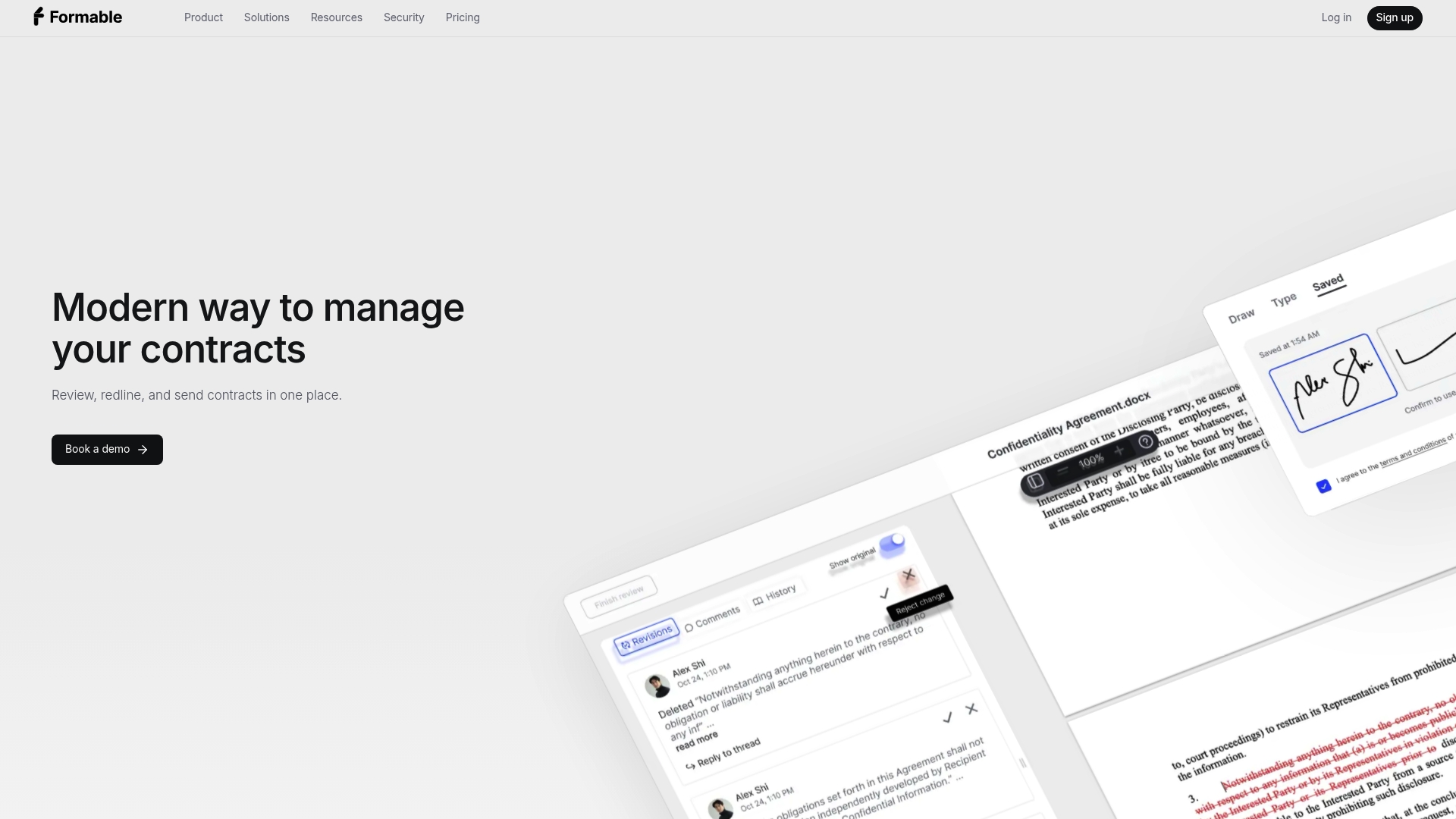
Formable gives business professionals unlimited LOI templates with built-in collaboration tools, so every stakeholder works from the same document without version confusion. The redlining feature tracks every change with a timestamp, which is critical when binding provisions are being negotiated. For teams that need a capable alternative to legacy e-signing platforms, Formable's redlining and negotiation features go well beyond basic signature collection. Reach out and Formable will walk through your specific LOI use case.
FAQ
What is an LOI template?
An LOI template is a pre-structured document that outlines the preliminary terms of a business transaction, separating binding provisions like confidentiality and exclusivity from non-binding terms like price and deal structure.
Which clauses in an LOI are legally binding?
Confidentiality, exclusivity, governing law, and expense allocation clauses are typically binding. Transaction terms like purchase price and conditions precedent remain non-binding until a definitive agreement is executed.
How long should a due diligence period be in an LOI?
The duration depends on deal complexity, but the LOI should specify the exact number of days, the scope of records accessible, and the conditions under which the period can be extended or terminated.
Can a free LOI template be used for a real transaction?
A free letter of intent template can serve as a starting point, but it requires customization for your specific deal type, industry, and jurisdiction, followed by attorney review of all binding provisions before use.
What happens if an LOI does not distinguish binding from non-binding terms?
Courts may treat the entire document as an enforceable contract, as established in Quake Construction v. American Airlines (1990). This exposes both parties to unintended legal obligations and potential litigation.