Close deals faster: 8 SaaS DPA clauses to draft and automate

Alex Shi

A data processing addendum (DPA) is the contract exhibit that legally authorizes a SaaS vendor to process a customer's personal data on its behalf, and any vendor touching customer personal data needs one signed before go-live. Treat it as a living document, not a one-time signature: update it whenever subprocessors change, security controls evolve, or transfer mechanisms shift, and keep the subprocessor list and security annex current above everything else.
TL;DR:
- A SaaS DPA must clearly define data categories, processing purposes, and duration tied to the master service agreement to ensure enforceability and compliance.
- Subprocessor management should rely on a published, regularly updated list with a notice window, allowing customers to object without derailing operations.
- Security measures need to reference specific frameworks like SOC 2 or ISO 27001, with practical evidence available within 48 hours of a customer request.
- Incident response clauses should specify notification timelines, content requirements, and collaborative response processes to meet regulatory standards.
- Managing DPAs as a living document with scheduled reviews, version control, and integrated workflows reduces operational risk and accelerates enterprise deal closure.
Table of Contents
- Data processing addendum for SaaS: the clauses that actually matter
- Subprocessing and cross-border transfers: getting the mechanics right
- The pre-signature checklist for negotiating a SaaS DPA
- Schedules and annexes: the part everyone forgets to update
- Running DPAs as a living workflow, not a filing cabinet document
- What enterprise customers actually redline, and how to respond
- Why treating DPAs like product features changes the outcome
- Build your DPA workflow inside Formable
- Sources
- FAQ
Data processing addendum for SaaS: the clauses that actually matter
Most DPA templates look interchangeable at a glance. They aren't. The difference between a DPA that protects your company and one that creates liability exposure during an incident usually comes down to five or six clauses that either got drafted with precision or got copied from a generic template without much thought.
Subject matter, duration, and purpose sound like boilerplate, but they define the boundaries of what your processing agreement actually authorizes. A SaaS contract data management clause that says "processing as needed to provide the services" gives you almost no protection if a customer later claims you exceeded scope. Specify the categories of data (account information, usage logs, payment metadata), the categories of data subjects (employees, end users, customers of your customer), and the exact purpose (hosting, analytics, customer support). Duration should tie to the term of the underlying master service agreement, not run indefinitely.
Controller and processor definitions are where most SaaS DPAs quietly fail. Regulatory guidance from the EDPB on controller and processor roles makes clear that misallocating these roles creates real liability gaps when something goes wrong. In the typical SaaS relationship, your customer is the controller (they decide why data gets collected) and you are the processor (you handle it on their instructions). But plenty of SaaS products blur this. If your platform makes independent decisions about how customer data gets used, say for product analytics or model training, you may be acting as a joint controller for that specific processing, and your DPA needs to say so explicitly rather than defaulting to a processor label that doesn't match reality.
Subprocessor definitions matter just as much. Your DPA needs a clear definition of what counts as a subprocessor (any third party that processes personal data on your behalf, from your cloud host to your email delivery vendor) and a mechanism for tracking them, which the next section covers in detail.
Documented instructions are the clause nobody reads until there's a dispute. GDPR-style frameworks require processors to act only on the controller's documented instructions, and a well-drafted DPA states exactly how those instructions get recorded, whether inside the main agreement, an order form, or a separate written notice. If your support team routinely takes verbal requests from customer admins about data handling, you have a gap between what the contract says and what actually happens operationally.
Security measures, often called technical and organizational measures (TOMs), need to move past vague language like "commercially reasonable security." Enterprise buyers increasingly expect the DPA to reference or attach a specific control framework. If you're SOC 2 Type II certified, cite it and commit to providing the report or a bridge letter on request. If you hold ISO 27001 certification, the same applies. The practical test: could your security team produce evidence for every TOM you've committed to within 48 hours of a customer request? If not, don't put it in the DPA.
Incident response and breach notification clauses need three things that generic templates often skip: a specific notification window, typically within a few days under most frameworks, though some enterprise customers negotiate for shorter periods, a defined content requirement (nature of the breach, categories and approximate number of data subjects affected, likely consequences, remediation steps taken), and a coordination commitment, meaning you'll work with the customer on any required regulatory notifications rather than leaving them to figure out their own obligations blind.
Data subject rights clauses assign responsibility for handling access, deletion, correction, and portability requests. Because your customer is typically the controller, they usually own the relationship with the end user, but your DPA needs to specify how you (the processor) support them. This means committing to a response timeline for forwarding or fulfilling requests, usually within a reasonable timeframe depending on the underlying regulation, and confirming that your platform has a technical capability to extract or delete a specific individual's data without a full account teardown.
Liability and indemnity language specific to data incidents deserves separate attention from the general limitation of liability clause in your master service agreement. Many SaaS DPAs either stay silent on this (leaving the MSA's general liability cap to govern, which enterprise legal teams will flag) or carve out a "super cap" specifically for data breaches, often set at a multiple of annual contract value, sometimes uncapped for certain categories like GDPR fines arising from vendor negligence. Know your negotiating position on this before you're in a live deal.
The core clauses your SaaS DPA needs, at minimum:
- Subject matter, duration, and specific processing purpose
- Categories of personal data and data subjects
- Controller/processor role designation, including joint controller scenarios if applicable
- Documented instructions mechanism
- Security measures mapped to a named framework (SOC 2, ISO 27001, or equivalent)
- Breach notification timeline and content requirements
- Data subject rights support obligations and response timelines
- Liability allocation specific to data processing incidents
A SaaS data processing agreement built around data minimization, purpose limitation, and documented vendor due diligence gives both sides something they can actually enforce, rather than language that reads well but means nothing under audit.
Subprocessing and cross-border transfers: getting the mechanics right
Subprocessor clauses cause more negotiation friction than almost any other part of a SaaS DPA, mostly because vendors and customers want opposite things. Customers want approval rights over every new subprocessor. Vendors want the flexibility to add infrastructure partners without running a approval cycle every time they spin up a new region on AWS.
The workable middle ground is a published subprocessor list with a notice window. Rather than requiring case-by-case sign-off, you maintain a public or customer-accessible list (many vendors host this as a URL that updates automatically), and you commit to notifying customers before adding a new subprocessor, typically 15 to 30 days ahead. Customers get an objection right within that window, tied to a legitimate data protection concern, not a general veto. If they object and you can't resolve it, the fallback is usually a termination right for the affected services rather than a blocked deployment.
Representative vendor DPAs illustrate both models in practice. Atlassian's data processing addendum structures its subprocessor disclosures and transfer appendices as living schedules that update independently of the core contract text, which is the pattern worth copying regardless of your company's size.
Here's the sequence that keeps subprocessor management from becoming a compliance liability:
- Maintain a due diligence file for every subprocessor before they touch customer data, covering their own security certifications, subprocessing agreements, and data residency commitments.
- Tier subprocessors by data sensitivity. A subprocessor that only sees anonymized telemetry needs less scrutiny than one processing raw customer PII.
- Set a review cadence, typically annual, to re-verify each subprocessor's security posture and confirm their DPA terms with you still hold.
- Log every subprocessor addition and removal with the date, notice sent, and any customer objections raised, since this becomes your audit trail during a regulatory inquiry.
Cross-border transfers add a second layer of complexity on top of subprocessor management. If your infrastructure or any subprocessor sits outside the jurisdiction where your customer's data subjects live, you need a valid transfer mechanism, most commonly Standard Contractual Clauses (SCCs), or you need to confirm the destination has an adequacy decision that covers the transfer. Google Cloud's data processing addendum shows how larger vendors structure this: transfer mechanisms live in their own schedule, referenced by the main DPA but updateable without renegotiating the whole contract.
Pro Tip: Don't bury your transfer mechanism inside dense legal text. Attach the actual SCC module as a labeled appendix and keep a one-page summary of which subprocessors rely on which mechanism. Auditors and enterprise security teams will ask for exactly this during due diligence, and scrambling to produce it in real time makes you look less prepared than you are.
Transfer impact assessments, required in some form under most modern transfer frameworks, don't need to be a heavy exercise for every subprocessor. Focus the assessment on subprocessors handling sensitive categories of data or operating in jurisdictions with weaker data protection enforcement, and document the assessment's conclusion (adequate protection confirmed, supplementary measures applied, or transfer restricted) as part of your due diligence file.
The pre-signature checklist for negotiating a SaaS DPA
Getting a DPA signed without creating downstream operational debt takes preparation before the redline conversation even starts.
Before any DPA goes to a customer, your team should complete a short internal cycle: confirm what data categories your product actually touches (not what you assume it touches), verify your documented lawful basis for each processing activity, and cross-check your subprocessor inventory against what the customer's security questionnaire will likely ask about. Skipping this step is the most common reason DPA negotiations stall midway. Someone on the legal side commits to a security control that engineering can't actually evidence.
Redline priorities during enterprise negotiations tend to cluster around a predictable set of asks. Knowing which ones to concede early and which to hold protects both your negotiating leverage and your operational sanity:
- Concede quickly: subprocessor notice windows, audit report delivery timelines, and data return format specifications, since these cost you little and build trust early in the conversation.
- Hold with a fallback position ready: uncapped liability for data incidents, on-site audit rights, and deletion timelines shorter than your technical capability supports.
- Escalate rather than negotiate solo: any request that touches your insurance coverage limits, source code access, or subprocessor approval requiring case-by-case customer sign-off.
The approval workflow itself should route through three checkpoints in sequence: security evidence (does the SOC 2 report or equivalent actually back every commitment in the DPA), engineering sign-off (can the platform technically deliver on data subject rights and deletion commitments), and legal sign-off (does the liability and indemnity language match your risk tolerance). Enterprise negotiations that skip the engineering checkpoint are the ones that come back six months later with a customer demanding a deletion capability that was promised on paper but never built.
One data point worth building your workflow around: DPAs work best as living contracts reviewed on a fixed cadence rather than left untouched until a customer flags a problem. That means scheduling a quarterly or semi-annual review of every active DPA against your current subprocessor list and security posture, not waiting for renewal to check whether the paperwork still matches reality.
Signature mechanics deserve more attention than most legal teams give them. E-signature platforms that timestamp and log the signing process create an audit trail that matters enormously if a regulator or customer later disputes when a DPA version took effect. Keep every signed version, not just the current one, and tag each with an effective date and a short changelog note describing what has changed from the prior version.
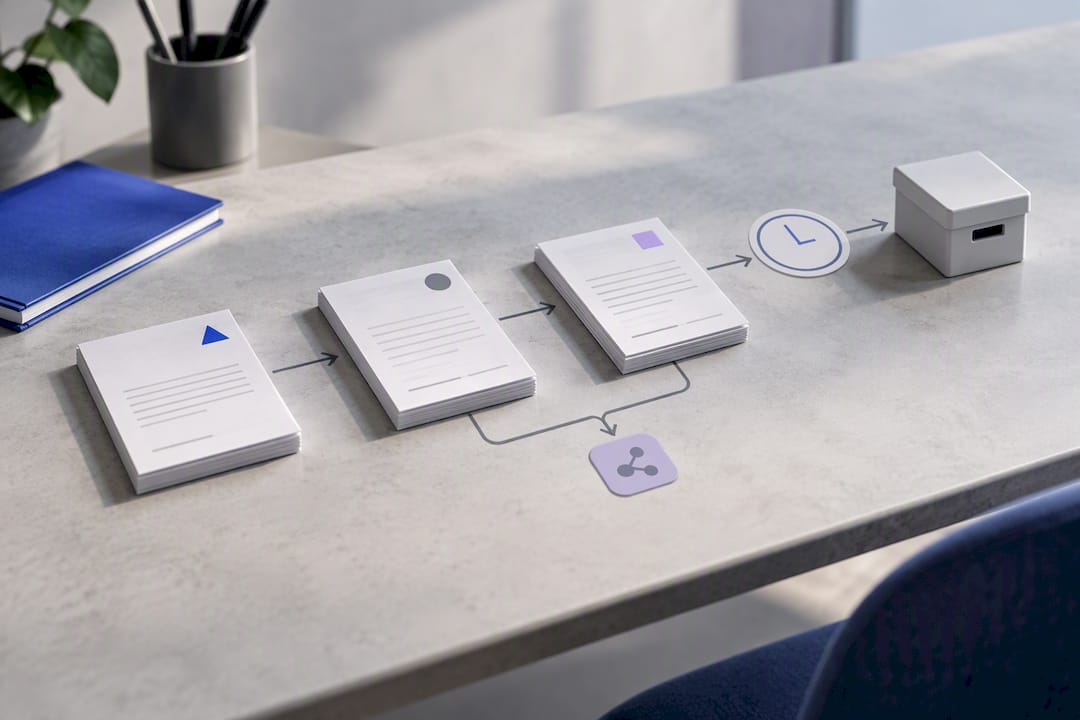
Version history and archived DPA management is where most companies quietly fall apart. Legal teams sign a DPA, file it in a shared drive, and lose track of which customer is on which version once amendments start piling up. A data processing agreement checklist built around clear versioning from day one prevents the scramble that happens when a customer asks "which version of the DPA governs our relationship" and nobody has a fast answer.
Schedules and annexes: the part everyone forgets to update
The schedules attached to a DPA carry more practical weight than the main body text, and they're the part that goes stale fastest. Three schedules do most of the work in a typical SaaS DPA.
Schedule 1: description of processing. This should read like a data inventory, not a legal paragraph. Fields to capture: categories of data subjects, categories of personal data, special categories if applicable, nature and purpose of processing, duration, and the technical format data takes (structured database, file storage, log streams). Vague language here is the single biggest reason DPAs fail an audit test.
Schedule 2: technical and organizational measures. Map every commitment to a specific control. If you claim encryption at rest, name the standard (AES 256, for example) and where it's implemented. If you claim access controls, describe the actual mechanism (role based access control, multi factor authentication requirements, logging retention period). Vendor DPAs that hold up under enterprise scrutiny tie every TOM claim to something an auditor can independently verify against a SOC 2 report or penetration test summary.
Schedule 3: transfer mechanisms. This schedule holds your SCC modules, any jurisdiction specific addenda like the UK's International Data Transfer Addendum (IDTA) where applicable, and a mapping of which subprocessors rely on which mechanism. Snowflake's customer data processing addendum ties its deletion and return procedures directly to contract termination timelines, which is worth modeling since it removes ambiguity about what happens to data the moment a customer relationship ends.
Keeping these schedules accurate long term comes down to a few practical habits:
- Store schedules as structured, machine-readable data (a table or database record) rather than static paragraphs buried in a PDF.
- Assign one owner per schedule who gets pinged automatically when the underlying fact changes (new subprocessor, new region, new certification).
- Review all three schedules together during every subprocessor addition, since a new vendor often touches all three at once.
- Version each schedule independently so a transfer mechanism update doesn't force a full DPA re-signature.
Vercel's data processing addendum reflects this pattern well: schedules that update on their own cycle rather than requiring the whole document to be renegotiated every time a detail shifts.
Running DPAs as a living workflow, not a filing cabinet document
Most SaaS companies treat DPA management as a legal afterthought: sign it, file it, forget it until a customer asks for a redline eighteen months later. That approach breaks down the moment your subprocessor list changes or a security certification lapses, because nobody catches it until an audit forces the question.
A better operational model treats the DPA the way you'd treat production code: versioned, logged, and owned by a specific process rather than a specific person's memory. Formable supports this by keeping contract templates, redline history, and signed versions inside one system rather than scattered across email threads and shared drives, so a legal team and an engineering lead can see the same version at the same time.
The workflow that scales looks like this:
- Store a current DPA template with pre-approved fallback language for the redlines you already know are coming, so a first draft goes out in minutes instead of days.
- Route incoming customer redlines through AI-assisted contract review to flag deviations from your standard terms before a human reads the full document line by line.
- Negotiate inside a shared workspace where both parties can see proposed changes in real time rather than trading marked-up Word documents by email.
- Trigger a review automatically whenever a subprocessor changes or a certification renews, rather than waiting for the next contract renewal to catch up on what's stale.
Pro Tip: Set a calendar trigger tied to your SOC 2 renewal date, not just your DPA's signature anniversary. Security certifications and contract terms drift out of sync more often than legal teams expect, and a DPA referencing an expired report is worse than one referencing none at all.
What enterprise customers actually redline, and how to respond
Enterprise procurement and security teams ask for roughly the same handful of things across nearly every SaaS deal. Knowing the standard ask and a defensible fallback position saves your legal team from relitigating the same argument every quarter.
Liability cap increases. Enterprise buyers routinely push for an uncapped or significantly raised liability ceiling specific to data breaches. Offering the insurance certificate upfront often defuses the ask before it turns into a drawn-out negotiation.
On-site audit rights. Very few SaaS vendors can realistically accommodate physical, on-site audits without disrupting operations for every other customer. The standard fallback: offer your current SOC 2 Type II report, a penetration test summary from the last twelve months, and a right to a virtual audit call with your security lead in place of a physical visit. This satisfies most enterprise security questionnaires without opening your facilities to every customer who asks.
Aggressive deletion timelines. Customers sometimes ask for immediate deletion upon termination, which rarely matches how backup systems and disaster recovery infrastructure actually work. Propose a defined window instead, commonly 30 to 90 days, with an explicit note that backup copies purge on their normal rotation schedule rather than requiring an emergency wipe.
Uncapped subprocessor approval rights. Some customers want case-by-case sign-off on every subprocessor addition. Counter with the notice-and-objection model described earlier, backed by your published subprocessor list, since a case-by-case approval requirement is operationally unworkable once you're managing dozens of enterprise contracts simultaneously.
A short list of what typically needs executive or general counsel sign-off rather than being resolved at the negotiation table:
- Requests to remove or significantly lower the liability cap entirely
- Physical audit access to production infrastructure
- Deviation from your standard subprocessor notice window by more than a few days
- Any request tied to a regulatory framework your standard DPA doesn't currently address
Escalating these rather than conceding under deal pressure protects the precedent for every contract that comes after it, since a single unusual concession has a way of becoming the next customer's opening ask.
Why treating DPAs like product features changes the outcome
Most legal teams still treat the DPA as a compliance checkbox that lives outside the product conversation. That's backwards. A DPA that's clear, current, and backed by evidence your security team can produce on demand closes enterprise deals faster than almost any feature on your roadmap, because procurement teams stall deals over exactly this kind of paperwork more often than they stall over pricing.
The companies that get this right stop treating privacy documentation as a one-time legal deliverable and start treating it as infrastructure that needs the same versioning discipline as their codebase. Automating subprocessor notices, tracking redline history, and keeping security evidence current isn't a legal nicety. It's what shortens your sales cycle. Cross-functional alignment between legal, security, and engineering on this single document tends to predict how fast your whole company closes deals, which says something about how underrated this piece of contract data management really is.
— Alex
Build your DPA workflow inside Formable
Formable gives SaaS legal and engineering teams one place to draft, negotiate, and sign the exact documents this article walks through, instead of juggling templates, redline threads, and signature tools separately. Start from a contract creator template built for DPAs, run incoming redlines through AI contract review to flag deviations from your standard terms automatically, and negotiate inside a browser-native workspace where both sides see changes in real time.
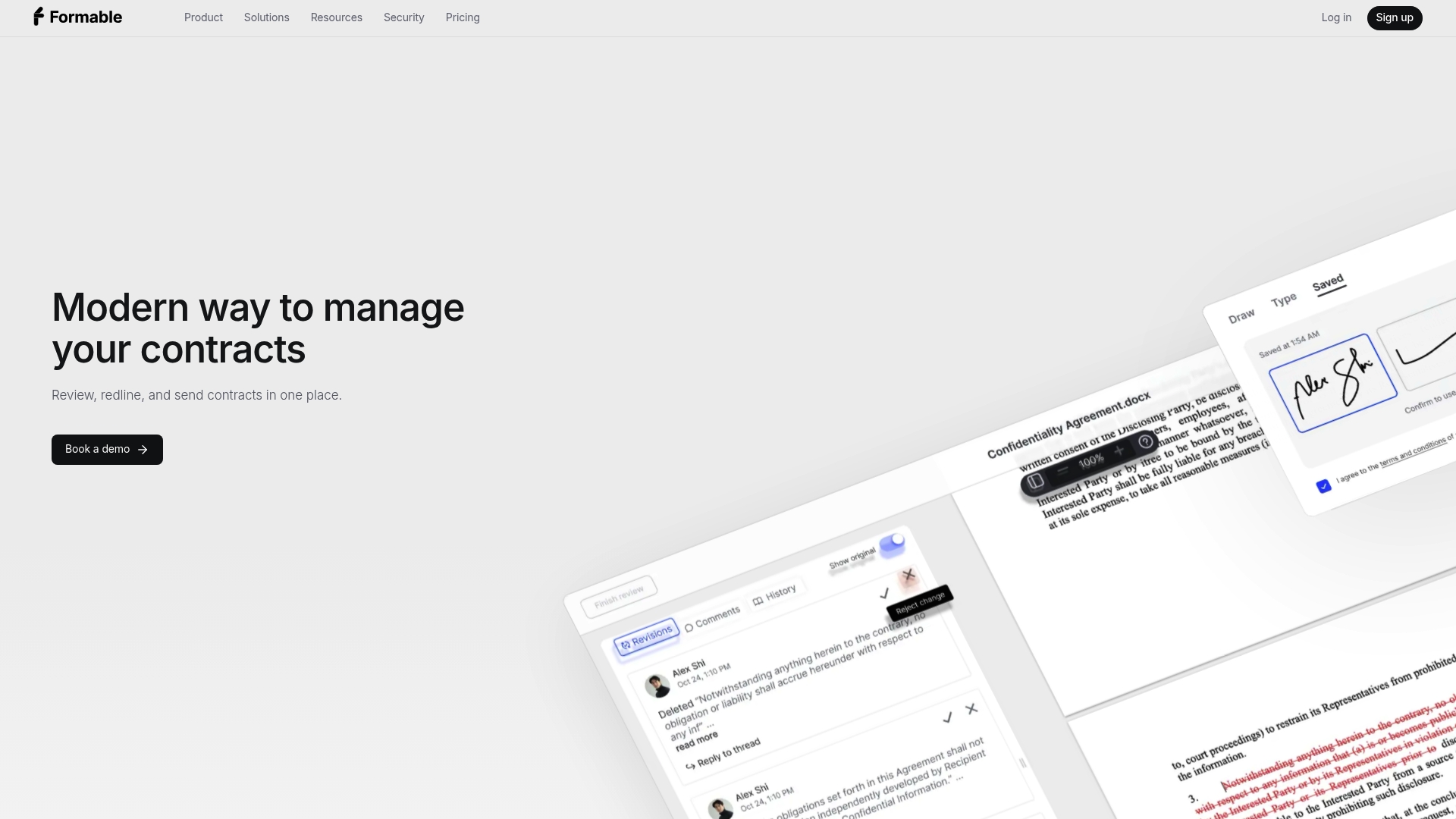
Once terms are locked, E-Signing closes the loop with a timestamped audit trail, and every signed version stays archived with its changelog intact. Teams on the Pro plan get this at $29.99 per month, while developer teams building signature or redlining into their own product can use the Growth plan's API access at the same rate. Check current pricing plans and start your first DPA template today.
Sources
Primary regulatory guidance and representative vendor DPAs age faster than most legal teams expect, so verify effective dates before relying on any of these as a drafting reference.
- GDPR data processing agreement: guidance updated
- Data controller or data processor? — EDPB guidance for SMEs
- GDPR vs DPA: 6 key differences and compliance best practices
Always confirm you're viewing the current version before copying language, since vendors update these documents without much fanfare.
FAQ
What is a data processing addendum?
A data processing addendum is a contract exhibit, attached to a master service agreement, that governs how a vendor processes personal data on a customer's behalf. It defines the scope of processing, security obligations, subprocessor rules, and what happens to data when the relationship ends, and it exists to satisfy GDPR-style obligations around lawful, documented processing.
Is a DPA mandatory?
Yes, if you process personal data on behalf of a customer acting as controller under most modern privacy frameworks, a signed DPA is a legal requirement, not an optional add-on. Any SaaS vendor handling customer personal data should expect enterprise buyers to require one before contract signature.
When should I use an IDTA instead of a standard addendum?
The International Data Transfer Addendum (IDTA) applies specifically to transfers involving UK data subjects under UK GDPR, while Standard Contractual Clauses (SCCs) cover transfers under EU GDPR. Most SaaS vendors serving both markets attach both mechanisms as separate schedule appendices rather than choosing one over the other.
What does the Atlassian data processing addendum cover?
Atlassian's publicly posted DPA structures its subprocessor disclosures and cross-border transfer mechanisms as living, independently updateable schedules attached to the core agreement. It's a useful reference for how larger vendors separate frequently changing details from the stable contract body.
How is a DPA different from a DPIA?
A DPA (data processing addendum) is a contract between a vendor and a customer governing how data gets processed, while a DPIA (data protection impact assessment) is an internal risk analysis a company runs before starting a high-risk processing activity. They serve different functions: one is a legal agreement, the other is a risk assessment process.
Can Formable help manage DPA versioning and negotiations?
Yes, Formable stores DPA templates, tracks redline history during negotiation, and keeps signed versions archived with changelogs, which addresses the version control challenge most legal teams struggle with manually. Current pricing is available for teams evaluating the platform.