Best free NDA contract templates for US use

Alex Shi

The best free path for most US users is Formable's contract creator, where you can generate a US-ready NDA from a guided template, customize the key terms, and move into e-signing in the same workflow. A properly completed free template can be just as enforceable as a paid document, because enforceability depends on reasonable terms and accurate customization, not on what you paid for the form.
What makes a free NDA template worth downloading:
- US-ready language with a governing law clause you can set to your state
- Editable in Word or Google Docs for quick customization
- Includes whistleblower-immunity language as required by 18 U.S.C. §1833(b) for employment-related agreements
- Compatible with e-signature platforms that generate a timestamped audit trail
- Available in both unilateral and mutual formats
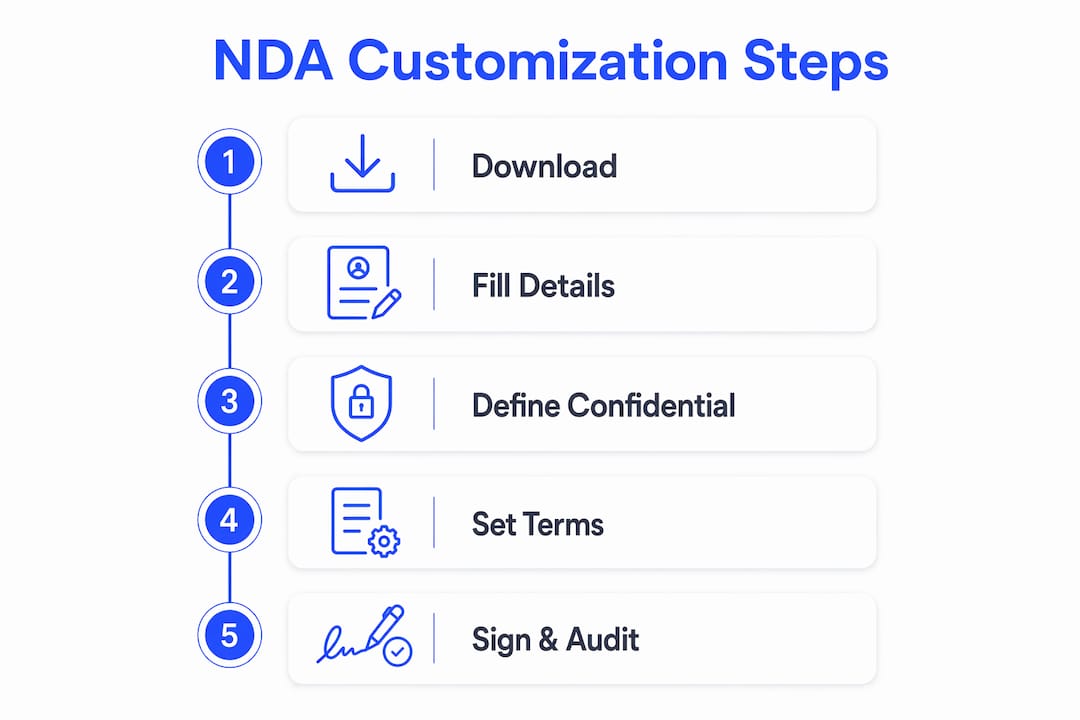
Quick next steps: download the template, fill in party names and the definition of confidential information, set the term and governing law, then sign electronically with identity verification.
Table of Contents
- How do you get a free NDA template fast?
- What is a nondisclosure agreement?
- What should every NDA include?
- Unilateral versus mutual NDAs: which one do you need?
- When is a free template enough, and when is it not?
- How to customize and sign a free NDA correctly
- Enforceability and state-law considerations in the US
- Pre-share checklist: steps to complete before disclosing confidential information
- Formable makes NDA workflows repeatable and auditable
- Key takeaways
- The part most people skip
- Useful sources for further reading
- FAQ
How do you get a free NDA template fast?
Formable's contract creator lets you generate a US-ready NDA in minutes, choosing between unilateral and mutual formats before you even open an editor. If you prefer a static file, downloadable NDA forms in Word, Google Docs, and fillable PDF are widely available from reputable template providers.
File format guidance:
- Word (.docx): best for heavy edits, clause additions, or redlining before signing
- Google Docs: best for real-time collaboration with the other party
- Fillable PDF: best for distribution and direct e-sign compatibility
Step-by-step workflow to prepare your NDA:
- Choose unilateral (one-way) or mutual (two-way) based on who discloses information.
- Fill in full legal names and addresses for both parties.
- Write a specific definition of confidential information, not a catch-all phrase.
- Set the term of confidentiality (commonly two to five years).
- Add return or destruction obligations for materials at the end of the relationship.
- Select your governing law state.
- Insert signature blocks with date fields for both parties.
Quick checklist to confirm your template is US-ready:
- DTSA whistleblower-immunity notice present for employment-related NDAs
- Governing law clause naming a specific US state
- Clear definition of confidential information with exclusions listed
- Duration term filled in (not left blank)
- Signature block with date fields for all parties
Online NDA builders reduce common drafting errors by prompting you for specifics like the confidentiality term and dispute resolution preferences before generating the document, which makes them a practical alternative to a blank template.

What is a nondisclosure agreement?
A nondisclosure agreement (NDA), also called a confidentiality agreement, is a legally binding contract in which one or both parties agree not to disclose specified information to third parties. It creates a documented obligation, not just a handshake.
Common situations where people use NDAs:
- Hiring a freelancer or independent contractor who will access proprietary processes
- Sharing product specs or pricing with a vendor before a formal contract
- Discussing a business idea or financials with a potential investor
- Demonstrating a product prototype to a prospective partner
- Entering preliminary partnership or joint-venture talks
Pro Tip: Use a unilateral NDA when only you are sharing sensitive information. Switch to a mutual NDA when both sides will disclose. Choosing the wrong type does not void the agreement, but it can create ambiguity about which party's obligations apply.
What should every NDA include?
Standard NDA forms typically cover parties, definition of confidential information, obligations, time frame, permitted disclosures, return of materials, and enforcement remedies. Missing any one of these creates a gap a court may use to limit your recovery.
Core clauses to verify in any template:
- Definition of confidential information: specifies what is and is not protected
- Exclusions: carves out publicly known information, independently developed knowledge, and legally required disclosures
- Term: states how long the obligation lasts
- Obligations of the recipient: describes permitted use and required care
- Permitted disclosures: covers disclosures required by law or court order
- Return or destruction: requires the recipient to return or destroy materials at the end of the relationship
- Remedies: typically includes injunctive relief language
- Governing law and dispute resolution: names the state and method (litigation, arbitration)
- Signature block with dates
The definition of confidential information and the exclusions clause are frequent sources of litigation. Disputes often turn on whether the information qualified as confidential under the contract's specific language, not on whether an NDA existed at all.
For employment-related NDAs, 18 U.S.C. §1833(b) requires a whistleblower-immunity notice. Omitting it does not always void the NDA, but it can limit your ability to recover exemplary damages and attorney's fees under the Defend Trade Secrets Act (DTSA).
Pro Tip: Keep the definition of confidential information narrow enough to protect your actual trade secrets, but specific enough that a court can identify what qualifies. Phrases like "all information shared" are routinely challenged.

Unilateral versus mutual NDAs: which one do you need?
A unilateral NDA binds only one party (the recipient) to confidentiality. A mutual NDA binds both parties equally. The choice affects which signature blocks, obligation clauses, and recitals you use.
Use-case guide:
- Hiring a contractor or employee: unilateral; only the worker receives your confidential information
- Vendor quotes or supplier onboarding: unilateral; you share specs, they keep them confidential
- Investor conversations: unilateral in most cases; investors rarely agree to mutual terms at the pitch stage
- Joint development or co-marketing talks: mutual; both sides share proprietary methods or customer data
- Partnership negotiations: mutual when both parties disclose financials or strategy
The practical rule: use unilateral when only you disclose, mutual when both sides share. For deeper guidance on drafting each type, Formable's unilateral vs. mutual NDA guide walks through the structural differences with examples.
When is a free template enough, and when is it not?
Free NDA templates handle the majority of everyday business relationships without issue. The risk is not the template itself; it is leaving fields blank or using language that does not match your actual situation.
Situations where a free template is typically sufficient:
- Freelancer or contractor onboarding for nontechnical work
- Vendor or supplier discussions before a formal agreement
- Preliminary partnership or co-founder conversations
- Nontechnical product demos with prospective clients
- Standard investor introductory meetings
Situations that warrant attorney review or a custom agreement:
- High-value trade secrets or patentable IP with significant commercial value
- Regulated industries such as healthcare (HIPAA-adjacent data) or financial services
- International transactions involving cross-border data transfers
- Complex multi-party arrangements with overlapping disclosure obligations
- Employment-related NDAs in states with strict enforceability limits, such as California
When the information you are protecting is worth more than the cost of a legal review, get one. DLA Piper's guidance on confidentiality agreements notes that enforcement depends heavily on state law and context, particularly for cross-border and high-stakes IP situations.
How to customize and sign a free NDA correctly
Customization is where a free template becomes an enforceable agreement. A blank or partially completed NDA provides almost no protection.
- Identify parties fully. Use legal names, not trade names or nicknames.
- Choose unilateral or mutual and confirm the obligation clauses match.
- Write a specific definition of confidential information. Name the project, technology, or data set.
- List exclusions explicitly: publicly available information, independently developed knowledge, and court-ordered disclosures.
- Set a duration. A typical confidentiality term is common for business NDAs; perpetual terms are harder to enforce.
- Select governing law and a dispute resolution method.
- Add the DTSA whistleblower-immunity notice if the agreement involves an employee, contractor, or worker relationship.
- Insert signature blocks with date fields for every signing party.
For e-signing, use a platform that generates a timestamped audit trail and captures identity verification. Saving an executed PDF with audit metadata is a widely recommended practice when using electronic signatures. Store the final executed PDF, keep the editable source file for future use, and log the date and context of each disclosure.
Pro Tip: When you negotiate terms before signing, capture all changes in a single redlined document. A clean redline history is your best evidence if a dispute arises about what was agreed.
Enforceability and state-law considerations in the US
A free template that is properly filled out is legally valid. Enforceability, though, depends on the reasonableness of the terms, the specificity of the definition of confidential information, and the law of the governing state.
Key enforceability factors:
- Overly broad definitions of confidential information are regularly struck down or narrowed by courts
- Duration terms that are unreasonably long (especially in employment contexts) face challenges in several states
- California restricts employee NDAs significantly; agreements that restrict post-employment activity face strict scrutiny under California law
- Cross-border agreements may trigger additional requirements under the laws of the other jurisdiction
A free template is a cost-effective starting point, but enforceability depends on accurate tailoring to the specific relationship. Customization is where the legal value is actually created.
The DTSA whistleblower-immunity notice under 18 U.S.C. §1833(b) is a specific federal requirement for employment-related NDAs. Missing it does not automatically void the agreement, but it can prevent you from recovering exemplary damages and attorney's fees in a federal trade-secret claim.
When to consult an attorney:
- High-value IP or trade secrets central to your business model
- Regulated industries (healthcare, finance, defense)
- Cross-border or international transactions
- Multi-party arrangements with complex disclosure flows
- Any employment-related NDA in a state with restrictive NDA laws
Pre-share checklist: steps to complete before disclosing confidential information
Run through this checklist before you share anything sensitive under an NDA.
- Select the correct template type: unilateral or mutual.
- Fill in full legal names and addresses for all parties.
- Write a specific, narrow definition of confidential information.
- Attach any exhibits (technical specs, data sets, project briefs) referenced in the agreement.
- Confirm the DTSA whistleblower-immunity notice is present if the other party is an employee or worker.
- Set the duration term. Do not leave it blank.
- Sign the agreement and verify the identity of all signatories before disclosing anything.
- Save the fully executed copy as a PDF with the e-sign audit trail.
- Log the date, parties, and subject matter of each disclosure in your records.
Common mistakes to avoid:
- Leaving the duration field blank (courts may treat the obligation as perpetual or unenforceable)
- Using an overly broad definition of confidential information that captures public knowledge
- Signing after you have already shared the information
- Failing to attach exhibits that define the scope of the disclosure
- Using a template designed for another jurisdiction without updating the governing law clause
Formable makes NDA workflows repeatable and auditable
Moving from a one-off free template to a repeatable process is where most small teams lose time. Formable's contract creator combines a template library with AI-assisted drafting, so you generate a correctly structured NDA in minutes rather than hunting for the right file.
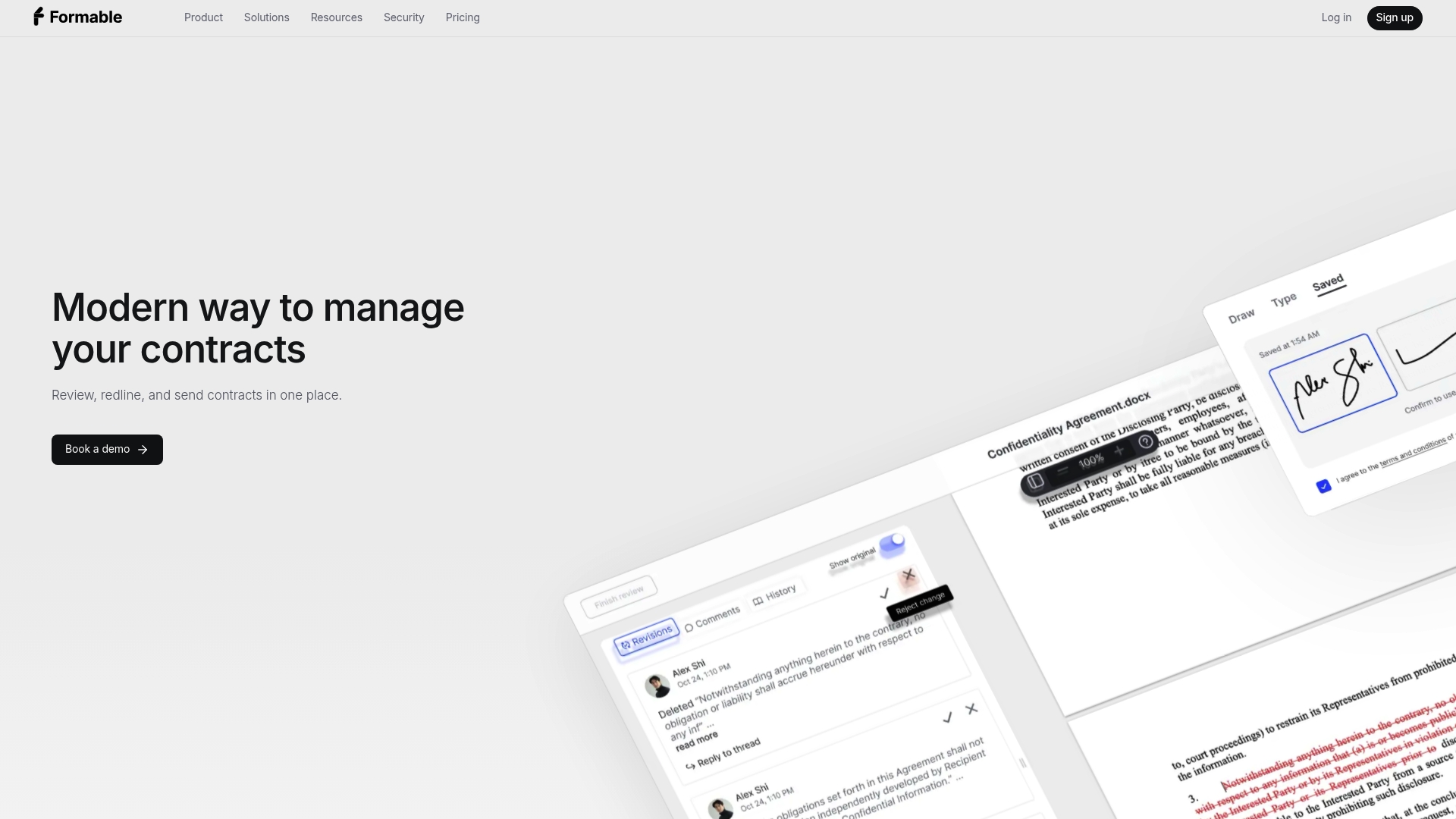
Formable covers the full NDA workflow in one place: template storage, collaborative redlining and negotiation, AI-powered risk checks that flag missing clauses (including the DTSA notice), e-signing with a timestamped audit trail, and version history so you always know what was agreed. You can switch between unilateral and mutual formats, import existing Word or Google Docs files, and use the API to embed signing directly into your own platform.
For product creators who want to protect an idea before sharing it, pairing an NDA with an idea validation tool can help you define exactly what you are protecting before you write the definition of confidential information.
Ready to replace the copy-paste workflow? Start with Formable and run your next NDA from template to signed PDF without switching tools.
Key takeaways
A properly completed free NDA template is enforceable in the US, but the DTSA whistleblower-immunity notice and state-specific terms are the two most common gaps that reduce that protection.
| Point | Details |
|---|---|
| Free templates are legally valid | Enforceability depends on accurate customization, not the cost of the form. |
| DTSA notice is required for employment NDAs | Omitting 18 U.S.C. §1833(b) language can limit recovery of exemplary damages and fees. |
| Choose the right NDA type | Use unilateral when only you disclose; use mutual when both parties share sensitive information. |
| Complete the pre-share checklist | Fill party names, define confidential information, set the duration, and sign before disclosing. |
| Formable for repeatable workflows | Formable's contract creator, redlining, AI risk checks, and e-signing cover the full NDA lifecycle. |
The part most people skip
Free NDA templates get a bad reputation, and most of it is undeserved. The real problem is not the template. It is the habit of treating the NDA as a formality rather than a document that will be read by a judge if something goes wrong.
The single most common drafting trap is the definition of confidential information. Teams write "all information shared between the parties" because it feels safe and comprehensive. It is neither. A definition that broad is routinely challenged, and courts have narrowed or voided it in disputes where the disclosing party could not point to specific information that qualified. The fix is simple: name the project, the technology, or the data set. Specificity is what makes the clause hold.
The habit worth building is this: before you share anything, attach an exhibit to the NDA that lists what you are disclosing. One page, dated, signed by both parties. That exhibit becomes your evidence if the other party later claims they did not know the information was confidential. It takes five minutes and it closes the most common enforcement gap in a free template.
Useful sources for further reading
These resources are worth bookmarking if you need deeper legal context on US NDA enforceability.
- 18 U.S.C. §1833 via Cornell Law LII: the primary text of the DTSA whistleblower-immunity provision; answers the question of exactly what notice language is required and when.
- DLA Piper: Confidentiality and non-disclosure agreements: practitioner-level guidance on enforceability, state-law variations, and when to seek counsel; useful for high-value IP situations.
- Cornell University Standard Bilateral NDA Form: a well-structured mutual NDA example from an institutional source; useful as a reference for clause structure and standard bilateral language.
- State-specific counsel: for employment-related NDAs in California or any cross-border transaction, consult a licensed attorney in the governing state before relying on a generic template.
FAQ
Are free NDA templates legally enforceable in the US?
Yes. A free template that is properly completed and signed is enforceable. Enforceability depends on reasonable terms, a specific definition of confidential information, and compliance with the governing state's law, not on what you paid for the form.
What is the DTSA whistleblower-immunity notice and do I need it?
The Defend Trade Secrets Act requires a whistleblower-immunity notice under 18 U.S.C. §1833(b) in any NDA that covers an employee, contractor, or worker relationship. Omitting it does not void the NDA, but it can prevent you from recovering exemplary damages and attorney's fees in a federal trade-secret claim.
What is the difference between a unilateral and a mutual NDA?
A unilateral NDA binds only the recipient to confidentiality; a mutual NDA binds both parties. Use unilateral when only you are sharing sensitive information, and mutual when both sides will disclose.
When should I use Formable instead of a standalone free template?
Formable is the better choice when you need a repeatable workflow: template storage, AI risk checks (including DTSA clause detection), collaborative redlining, and a timestamped e-sign audit trail, all in one platform rather than across separate tools.
Can I use a free NDA template for a freelancer or contractor?
Yes, a free template is generally sufficient for freelancer and contractor relationships. Confirm the template includes the DTSA whistleblower-immunity notice, a specific definition of confidential information, and a governing law clause before signing.