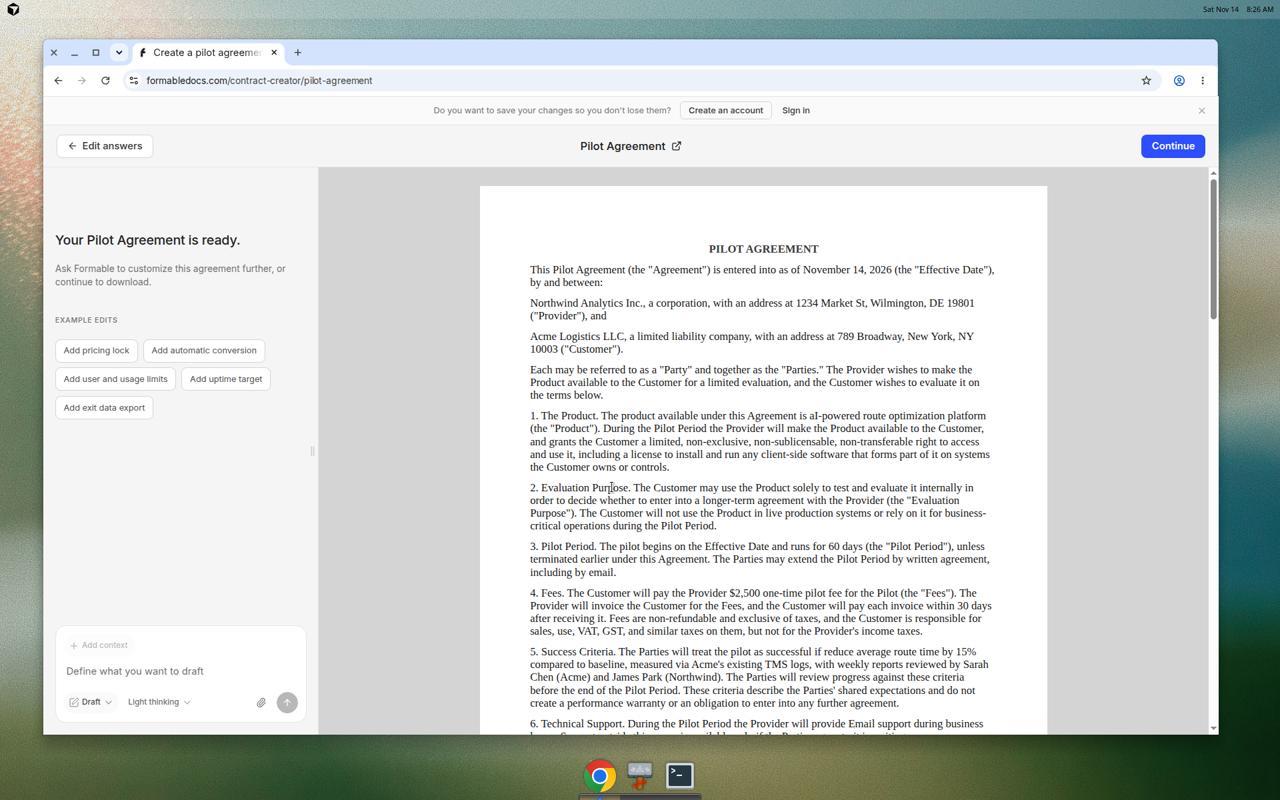
A pilot agreement limits the trial to evaluation, sets measurable success criteria, protects each party's data and IP, and states what happens when the pilot ends. Write it before the pilot starts, not after someone's already running your product in production without a contract.
The fastest path to a signed pilot agreement is to walk through a structured questionnaire that asks the right questions in the right order, then generates a complete draft you can review and send for e-signature. Before you start, confirm you can answer these questions:
- What product is being tested, and what can the customer do with it during the pilot?
- How long does the pilot run, and what happens when that period ends?
- Is the pilot free or paid, and if paid, how much and when is payment due?
- What results prove success, who measures them, and when?
- How quickly must each party delete the other's data after the pilot?
- Does the pilot convert into a full agreement automatically, or do both sides walk away freely?
If you can't answer these six questions before you draft, schedule a 30-minute scoping call with the other side and get them settled first. A pilot agreement with blank brackets or "to be determined" language is worse than no agreement at all.
Note: This article provides general information about pilot agreements. It is not legal advice and does not create an attorney-client relationship.
Step 1: Define the product and evaluation purpose
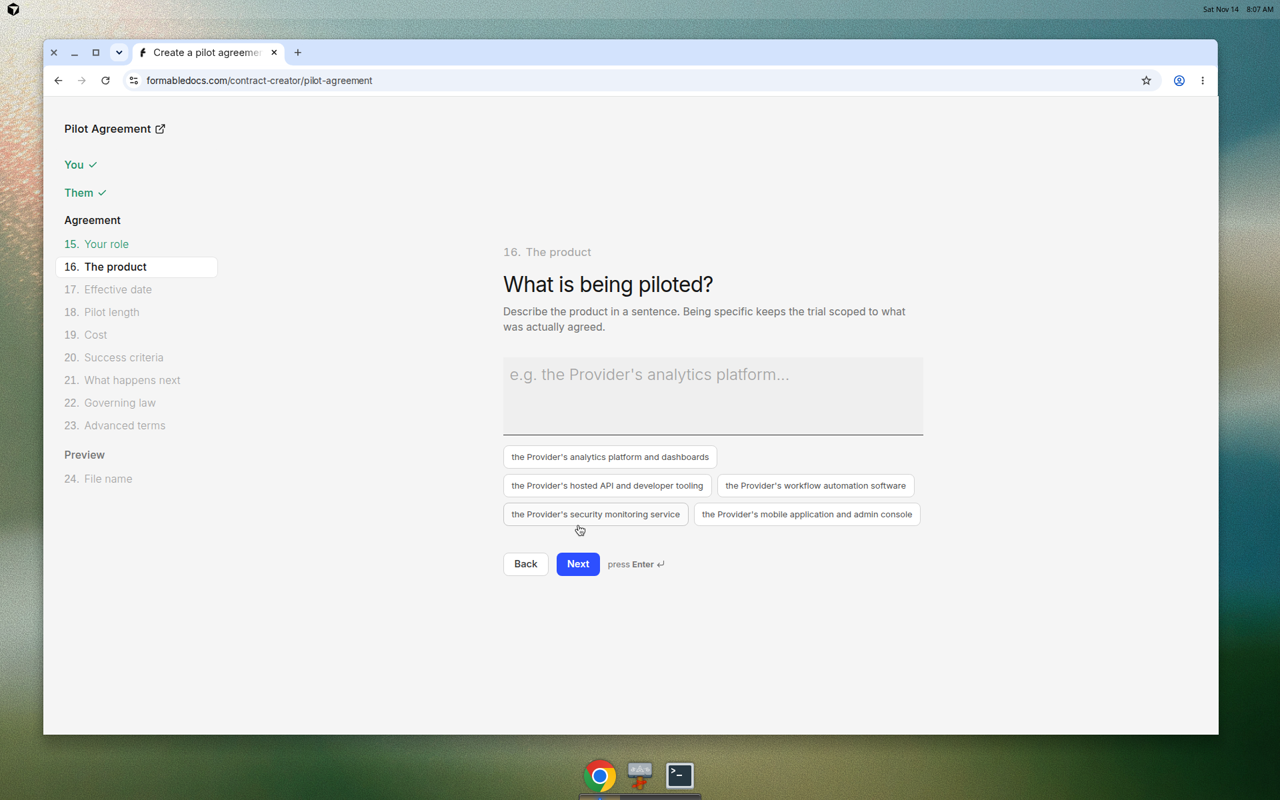
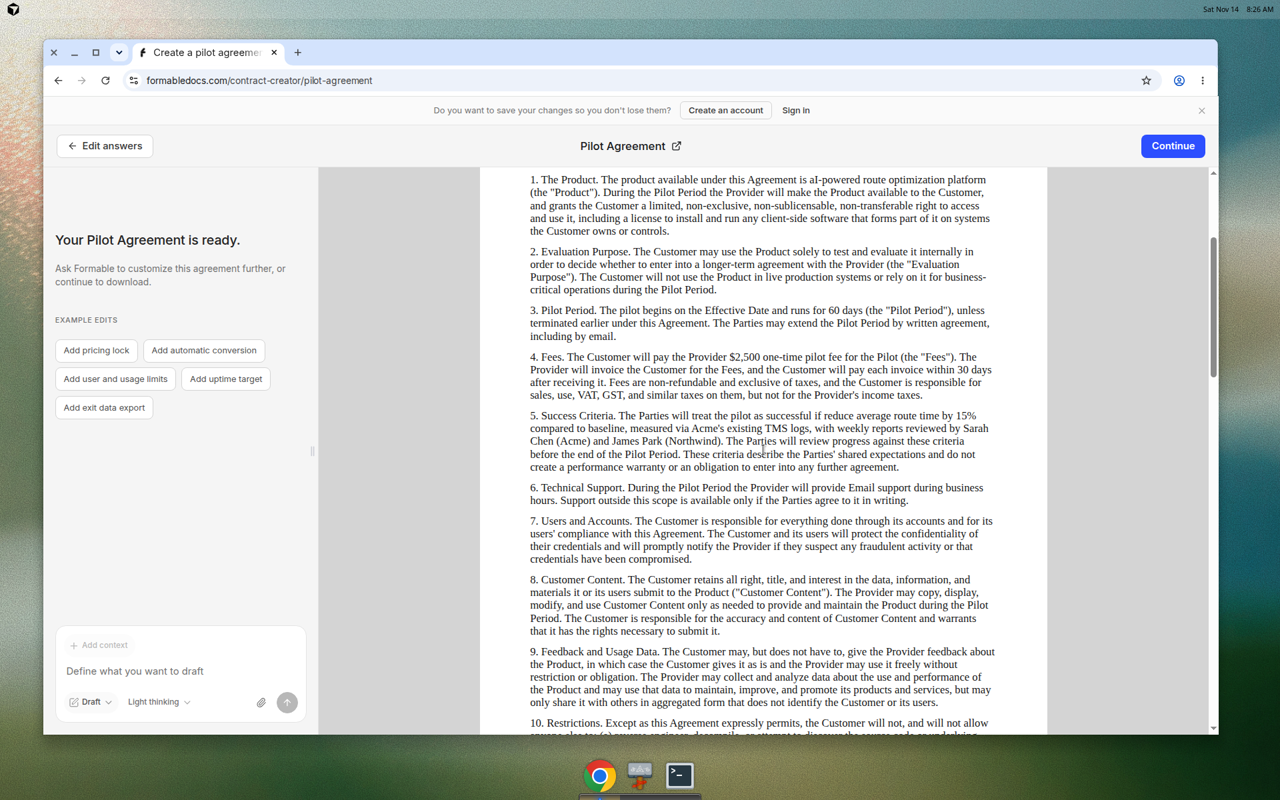
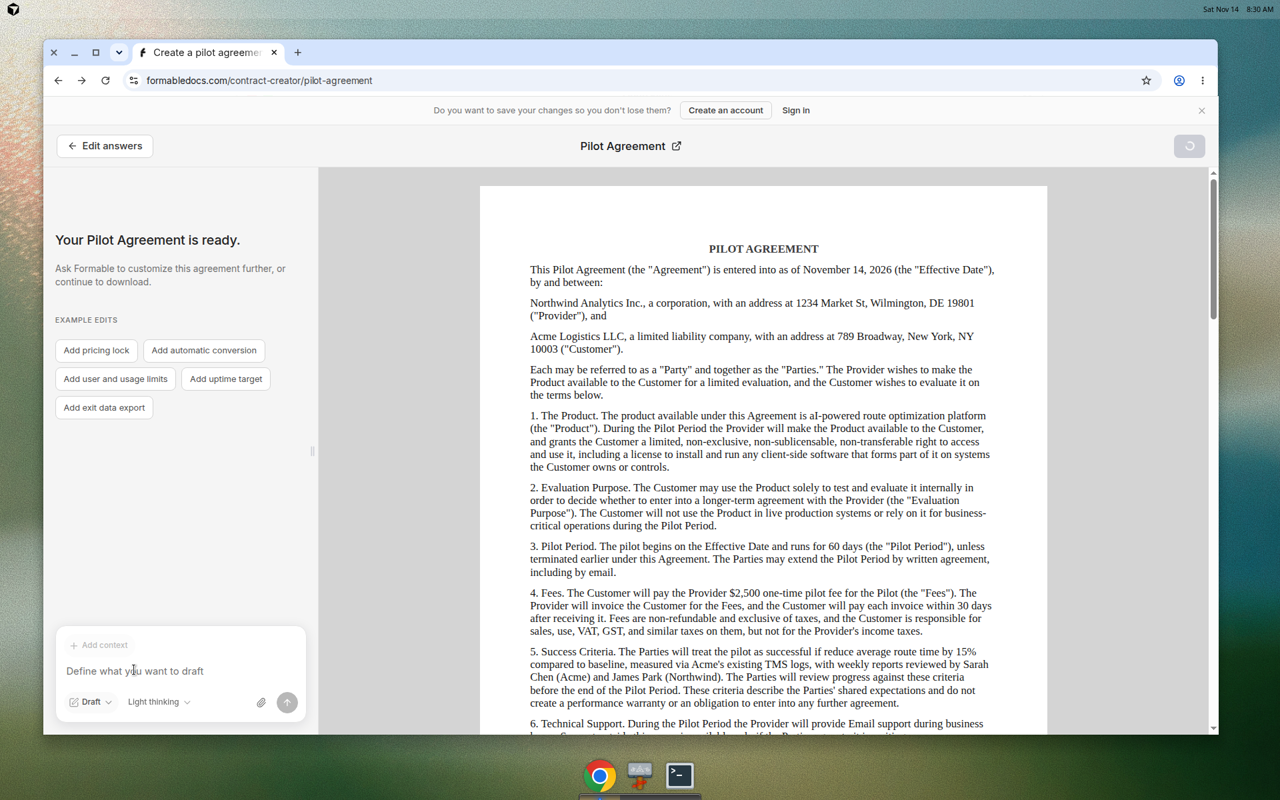
Start by naming what the customer is testing and why. The product description does not need to be three pages. A single sentence works: "AI-powered route optimization platform" or "cloud-based AP automation software." The evaluation purpose ties the pilot to a specific business question: "Test whether the platform reduces delivery costs by 15% before signing a 2-year enterprise agreement."
The evaluation purpose clause limits use to testing. It prevents the customer from treating the pilot as a free production license and prevents the vendor from claiming the pilot obligates the customer to buy. Strong evaluation purpose language looks like this:
Customer may use the Product solely to evaluate whether to enter a longer commercial agreement. Customer agrees not to use the Product in live production systems or for any purpose other than evaluation during the Pilot Period.
Weak language looks like "Customer will test the Product." That tells you nothing about scope and gives neither side leverage if the other starts treating the pilot as something it is not.
Step 2: Set the pilot period
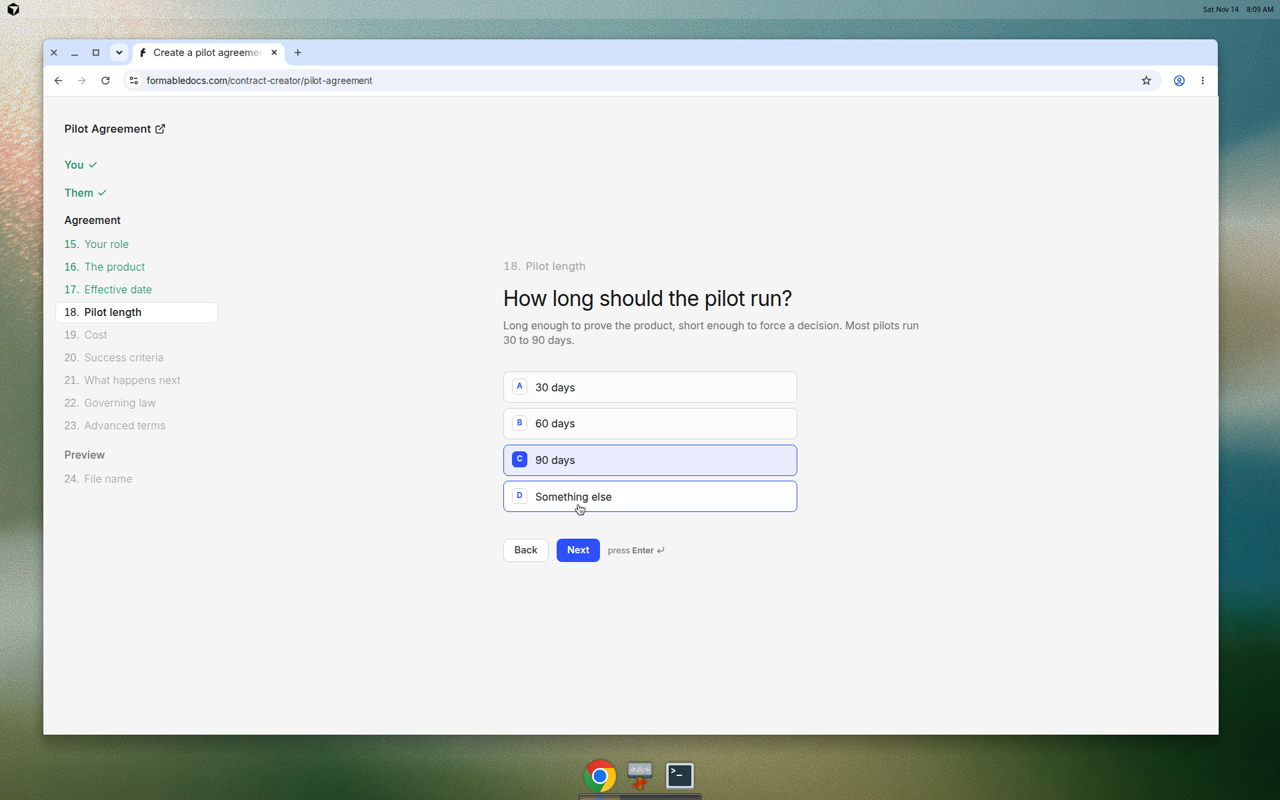
Pick a fixed start and end date, or a fixed number of days from the effective date. Pilots that run "until further notice" drift. The most common pilot lengths are 30, 60, or 90 days. Shorter than 30 days rarely gives the customer enough time to integrate and measure results. Longer than 90 days starts to look like a production contract disguised as a pilot.
The pilot period clause should state both the length and what triggers the start. If the start depends on the vendor completing onboarding, say so: "The Pilot Period begins on the date Vendor provides Customer with login credentials and runs for 60 days from that date."
If either side can terminate early, state the notice period and whether termination requires cause. Most pilots allow termination for convenience on 30 days' notice, giving both sides an exit if the fit is clearly wrong before the full period runs.
Step 3: Decide fees
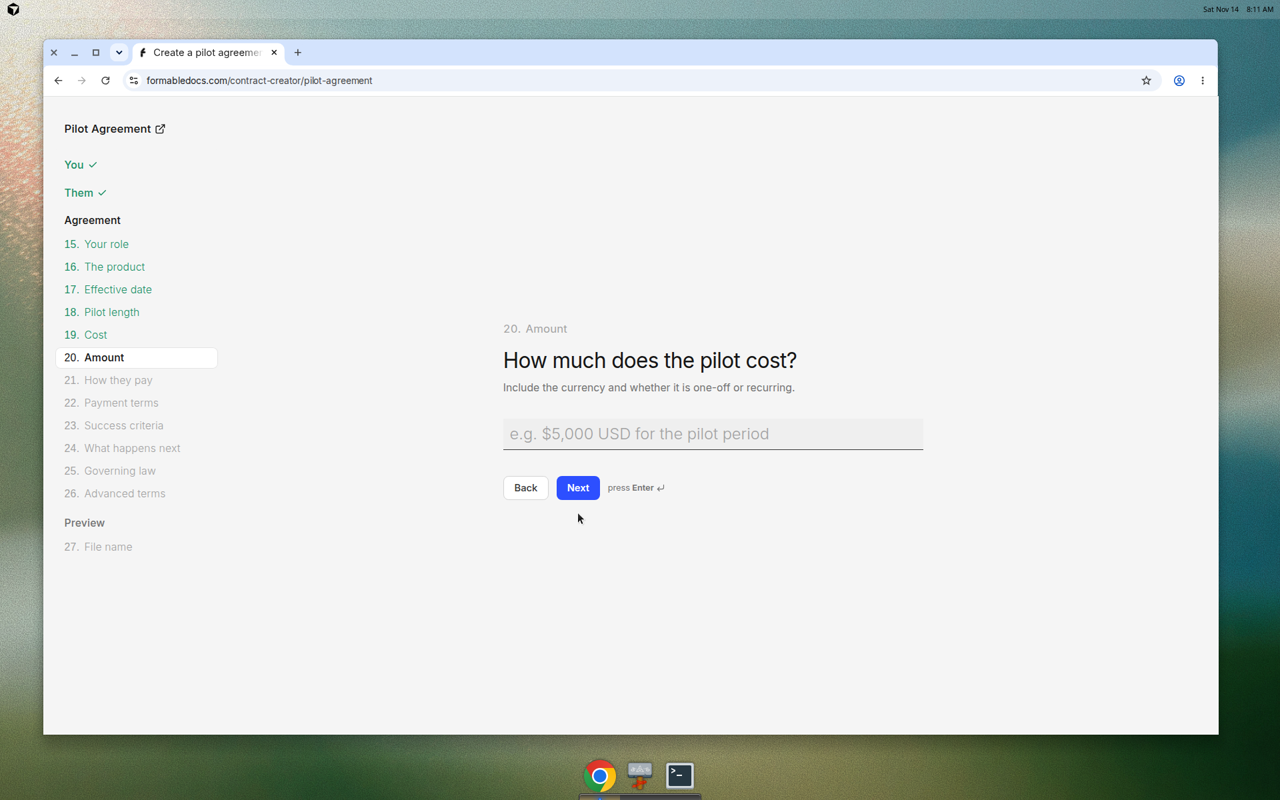
Many pilots are free or discounted, but even a free pilot needs a fees clause. That clause documents the discount and confirms that the customer owes nothing unless the agreement says otherwise. A free pilot should say explicitly: "Vendor waives all fees during the Pilot Period."
If the pilot is paid, the fees clause states the amount, when payment is due, and how the customer pays. Net 30 is standard for invoiced pilots. Paid pilots signal seriousness from both sides and tend to pull in more resources and better data than free ones.
The fees clause should also clarify whether the pilot fee applies toward a full contract if the pilot converts, or whether it is a standalone charge. If it applies, say so: "If Customer enters a commercial agreement within 30 days of the Pilot Period end, Vendor will credit the Pilot Fee toward the first invoice."
Step 4: Write success criteria
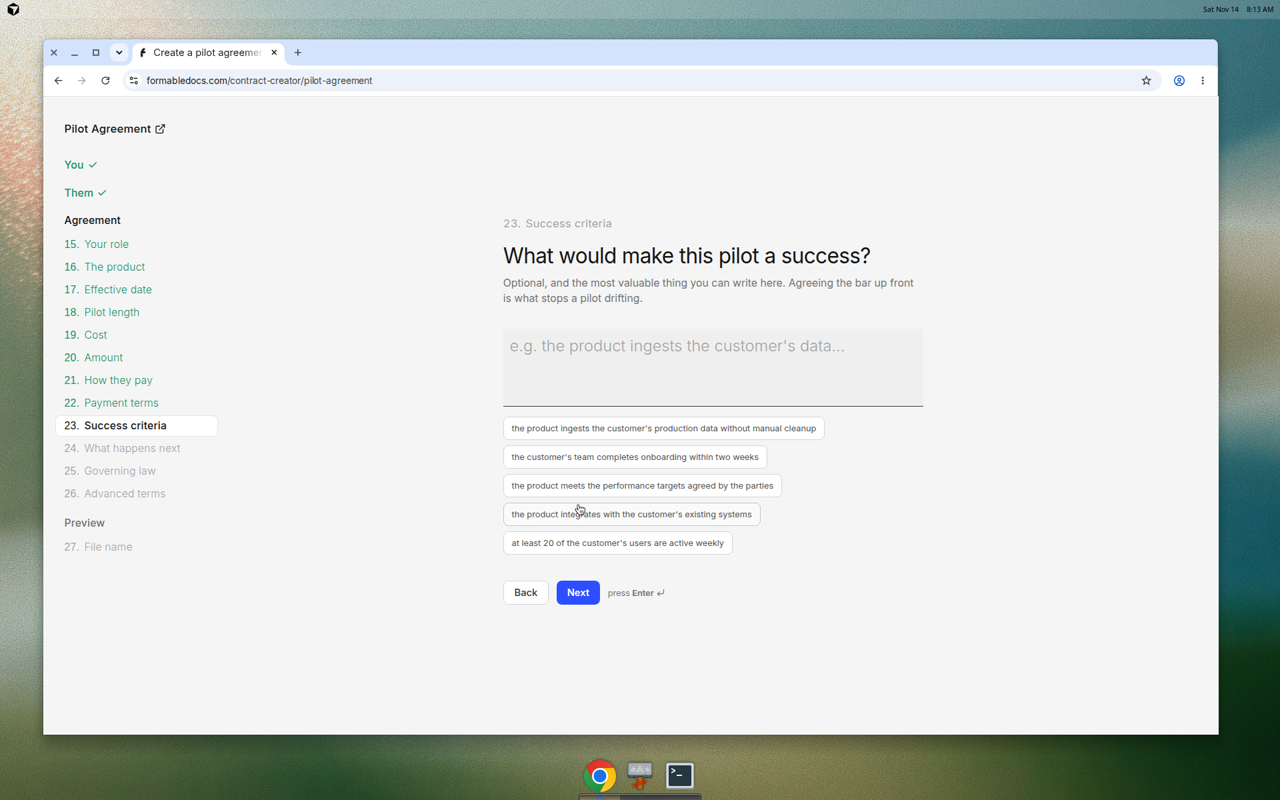
Success criteria are the measurable results that prove whether the pilot worked. They belong in the contract, not in a separate project plan that gets lost. Weak criteria are vague ("improve efficiency") or subjective ("user satisfaction"). Strong criteria state a metric, a baseline, a target, a data source, and an owner.
For example:
Success Criterion: Reduce average route time by 15% compared to the baseline measured in the 30 days prior to the Pilot Period. Measurement will use data from Customer's existing TMS logs. Customer's VP of Operations and Vendor's Customer Success Manager will review progress in weekly reports.
That criterion tells both sides exactly what counts as success, what data proves it, and who checks the numbers. If you can't write criteria that specific before the pilot starts, you are not ready to sign the agreement.
For a detailed guide to writing success criteria with the five required parts, see how to define pilot success criteria.
Step 5: Data, feedback, and confidentiality
The pilot agreement needs three data clauses: customer content ownership, feedback rights, and confidentiality.
Customer content ownership: The customer keeps ownership of any data it submits during the pilot. The vendor may use that data only to run the product during the pilot period. This clause prevents the vendor from claiming rights to the customer's operational data.
Feedback rights: Feedback the customer chooses to give can be used freely by the vendor to improve the product. This clause is typically one-way: the vendor gets feedback rights, but the customer does not get rights to the vendor's roadmap or internal data.
Confidentiality: Both sides agree not to disclose non-public information about the product, the customer's data, or the terms of the pilot itself. Standard confidentiality obligations survive for three to five years after the pilot ends.
If the product processes personal data covered by GDPR or CCPA, attach a data processing agreement as an exhibit and reference it in this section.
Step 6: Liability and disclaimers
Pilot agreements disclaim implied warranties and cap liability. The product is provided "as is" for evaluation purposes. The vendor does not promise that it will be error-free, and the customer accepts that risk as part of testing an unproven product.
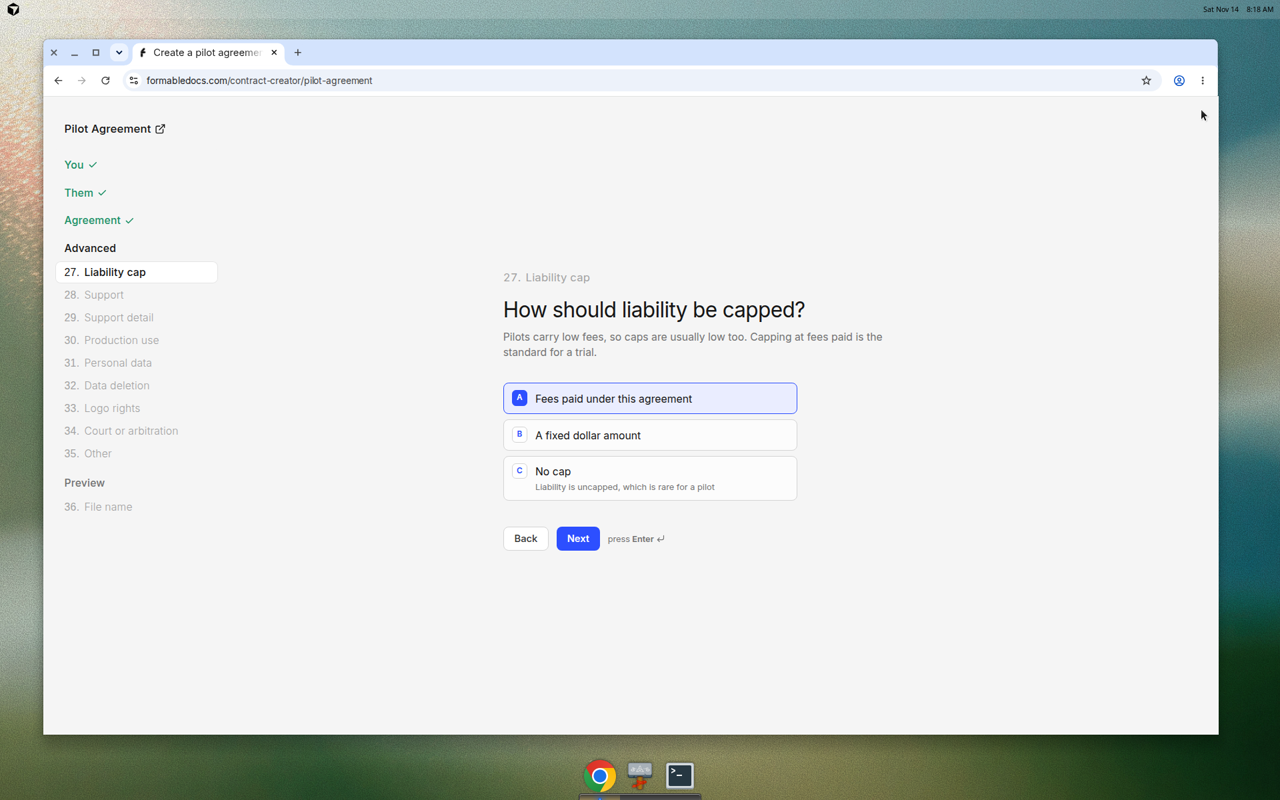
Liability caps in pilot agreements typically tie to fees paid. For a free pilot, the cap might be a fixed amount like $5,000 or $10,000. For a paid pilot, the cap is usually the fees paid under the agreement. Both caps are mutual: they limit what either side can recover from the other.
The cap does not apply to fraud, willful misconduct, or breaches of confidentiality or IP obligations. Those carve-outs are standard and rarely negotiated.
Step 7: What happens at the end
The conversion clause states what happens if the pilot succeeds. Strong conversion language includes pre-agreed pricing or terms for the full commercial agreement, so the parties do not have to start from scratch if the pilot goes well.
Weak conversion language looks like: "If the pilot is successful, the parties will negotiate a commercial agreement." That language guarantees at least two more months of back-and-forth over price, term, and legal terms.
Strong conversion language looks like: "If Customer meets the Success Criteria, Vendor will offer a commercial agreement at the following rates: [price table]. If Customer accepts within 30 days of the Pilot Period end, the agreement will take effect immediately."
The conversion clause should also make clear that neither side is obligated to move forward. A pilot with no pre-negotiated conversion terms tends to drift into a second, third, and fourth negotiation round right when momentum is highest.
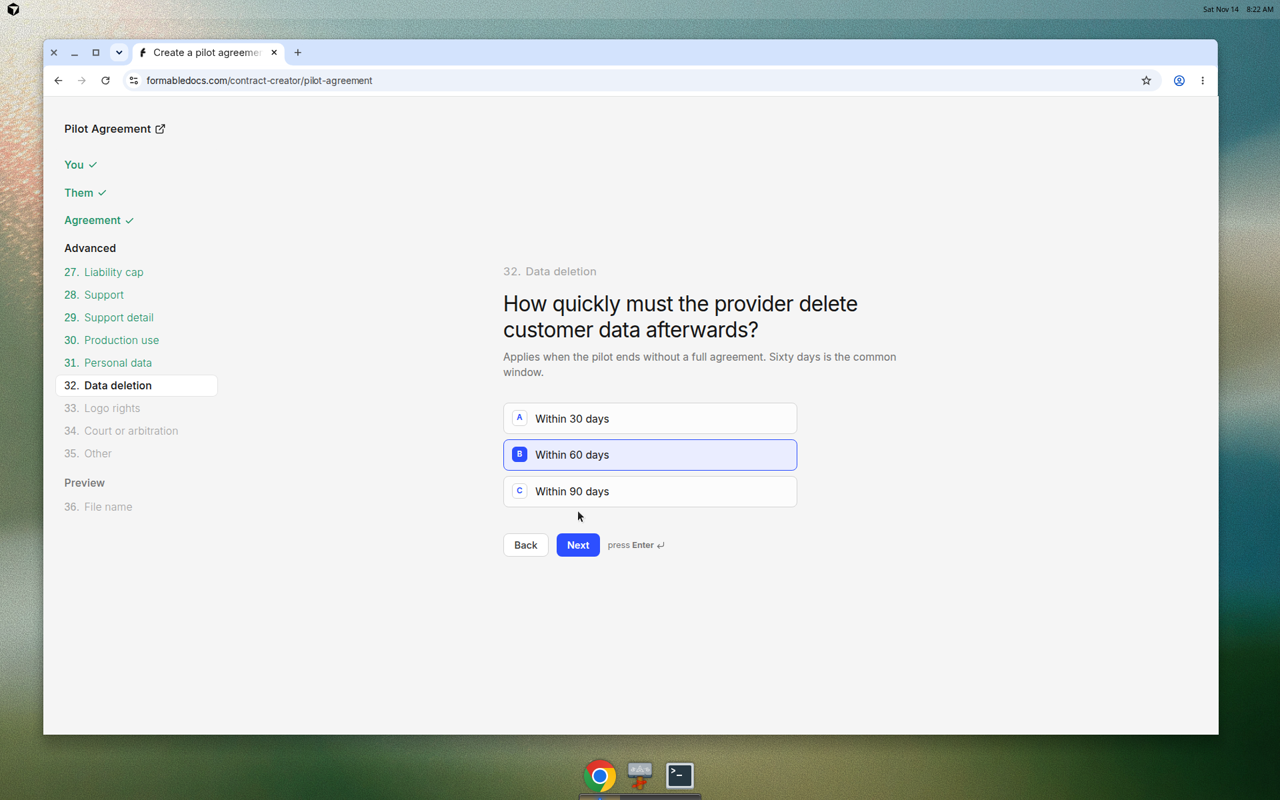
Data deletion obligations also belong in this section. State how many days after the pilot ends each party has to delete the other's data. 30 days is common for customer content. Shorter windows create operational risk; longer windows create security and compliance exposure.
Step 8: Fill it in with the guided questionnaire and send for e-signature
Once you know the answers to the seven steps above, use a free pilot agreement template to generate the full draft. The template asks the same questions in a guided questionnaire: party names, product description, pilot length, fees, success criteria, liability cap, data deletion period, governing law, and optional clauses for support, DPA, publicity, and conversion terms.
The questionnaire walks through each field and explains what it controls in the final agreement. As you answer, the template generates a complete draft in real time. Once the draft is complete, you can preview it, download it as a PDF or Word file, or send it directly for e-signature.
E-signature closes the agreement without a separate tool. Each signer receives a link, reviews the document, fills in any remaining fields, and signs. The signed copy arrives by email with a tamper-proof audit trail attached.
If terms need to change after you send the draft, redline the agreement with tracked changes and send the revised version. Both sides can see exactly what changed, accept or reject each revision, and finalize terms in one sitting instead of three email rounds.
Detailed guides for pilot agreements
FAQ
How long should a pilot agreement be?
Most pilot agreements run 5 to 8 pages. They are shorter than full commercial agreements because they cover a limited scope and a fixed time period. A pilot agreement that runs longer than 10 pages is probably overspecified for a trial.
Can a pilot agreement be verbal?
A verbal pilot agreement is enforceable, but proving the terms later is nearly impossible. Always put the pilot terms in writing before work starts, even if the pilot is free or short.
What is the difference between a pilot agreement and a trial?
A pilot agreement is a contract that governs a trial period. The trial is the activity; the pilot agreement is the legal document that sets the terms for that trial.
Do I need a lawyer to write a pilot agreement?
Most pilot agreements follow a standard structure and can be drafted from a template without counsel. If the pilot involves regulated data, custom development work, or unusual liability exposure, have counsel review the draft before signing.
Should I send the pilot agreement before or after the demo?
Send the pilot agreement after the demo and the scoping call, but before the pilot starts. The demo confirms interest; the pilot agreement locks the terms before work begins.