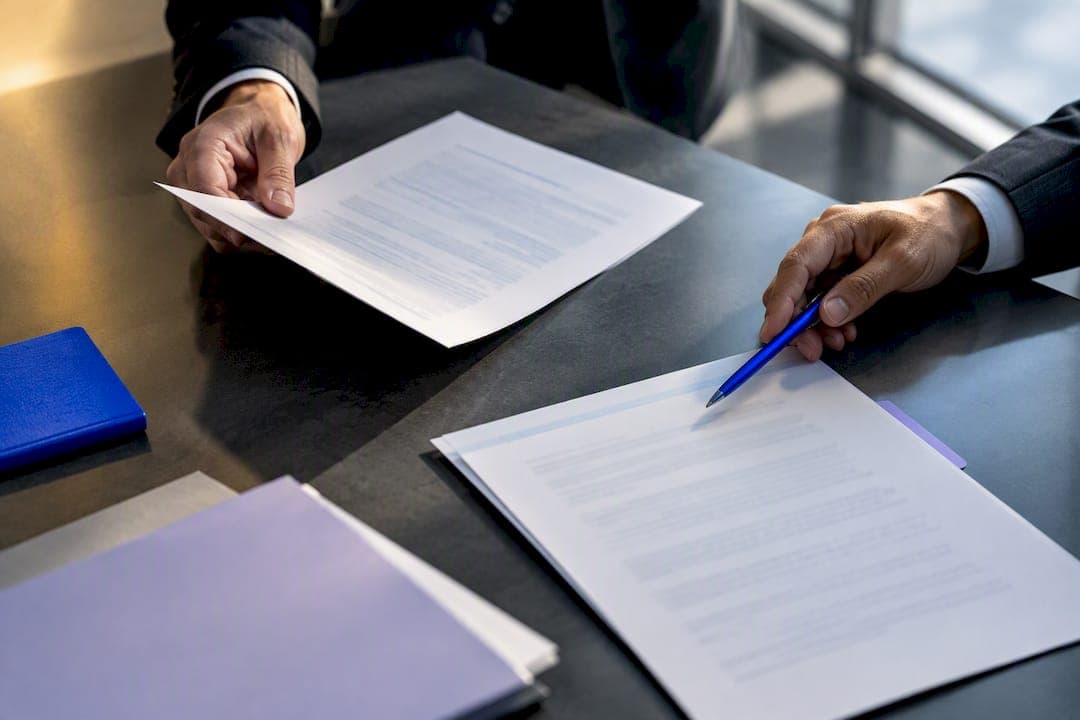
Yes, a verbal agreement can be legally binding in the United States. Courts treat an oral contract as a real contract when it has the same elements a written one needs. The catch is that some categories of deals must be in writing, and even a valid oral deal is hard to prove once the parties disagree about what was said. For a startup closing agreements by phone, Slack or a handshake, the safe habit is to turn every spoken yes into a signed document the same day. That is the workflow we built Formable around.
TL;DR
- Oral contracts are generally enforceable in the US if there is an offer, acceptance, consideration, definite terms and a lawful purpose.
- Statutes of frauds require a writing for certain deals: real property, agreements that cannot be performed within one year, promises to pay another person's debt, and sales of goods of $500 or more.
- The weak point is proof. The party who wants to enforce the deal carries the burden of showing what was agreed.
- Emails, invoices, payments and conduct can back up an oral deal, but a signed agreement settles the question before it starts.
- Turn verbal commitments into a written, signed document right away, with an audit trail of who agreed to what and when.
What makes a verbal agreement binding
A contract is a promise or set of promises the law will enforce. Whether it is spoken or written does not change that. California's civil jury instructions, which judges read to juries, say that oral contracts are as valid as written contracts, and that a contract can be written, oral, or partly both.
California's Civil Code states the default rule directly: all contracts may be oral unless a statute specifically requires a writing. The statute dates to 1872. Other states follow the same basic approach, with their own variations.
What the law looks for is the same in each case. According to Cornell's Legal Information Institute, a contract generally requires mutual intent to be bound, a definite offer, an unconditional acceptance and consideration. A 2025 overview of US contract law from a law firm adds that courts generally measure intent objectively, meaning by what a party said and did, not by what they privately meant.
In practice, an oral agreement is enforceable when:
- Both sides showed intent to be bound. "Let's talk about doing a pilot" is a negotiation. "Yes, we'll take the pilot at that price" is acceptance.
- The essential terms are definite enough. Price, scope, timing and who does what must be clear enough for a court to know what was promised.
- Something of value is exchanged. The law calls this consideration. Money for services is the usual form.
- The subject matter and performance are lawful.
The same overview says that oral agreements are enforceable with some exceptions. The exceptions are where most business deals go wrong.
When a verbal agreement is not enough: the statute of frauds
The statute of frauds is a set of state laws that require certain contracts to be in writing and signed by the party against whom the contract is enforced. Despite the name, it has nothing to do with proving fraud. It simply says that for listed deal types, a spoken promise alone cannot be enforced in court.
The details vary by state. Cornell's summary says that oral contracts are generally enforceable, but that statutes of frauds require writing for certain agreements. In California, those include real-property sales, long-term leases and agreements that cannot be performed within one year. California's Civil Code section 1624 lists the categories and requires that the contract, or a note or memorandum of it, be in writing and subscribed (signed) by the party to be charged.
Here are the categories a startup, brokerage or legal team meets most often.
| Type of deal | Does it need a writing? | Where it comes from |
|---|---|---|
| Sale or transfer of real property | Yes | State statute of frauds, such as California Civil Code § 1624 |
| Long-term lease | Yes, in California | Same section |
| Agreement that cannot be performed within one year | Yes | Same section |
| Promise to pay another person's debt (a guaranty) | Yes, with a limited exception | Section 1624(a)(2) |
| Sale of goods priced at $500 or more | Yes, a signed writing indicating a contract was made | UCC § 2-201 |
| Most service agreements that can be finished within a year | No, but proof is difficult | General contract law |
Two details matter for business readers.
The one-year rule is about performance, not intent. A founder who agrees by phone to a three-year reseller arrangement has made a deal that, by its terms, cannot be completed within a year. That is the kind of agreement a writing requirement covers. A 90-day pilot that might get extended is different.
Goods have their own rule. Under the Uniform Commercial Code, which governs sales of goods in nearly every state, a contract for goods priced at $500 or more is not enforceable unless a signed writing indicates a contract was made. Between merchants there is a trap: a written confirmation that one side receives and does not object to in writing within 10 days can satisfy the writing requirement against them. Sending a confirmation after a call is therefore useful. Receiving one and ignoring it can cost you.
Texts, instant messages and real estate
Real estate brokers should note a California rule from 2014. AB 2136 added a subdivision to section 1624 saying that an ephemeral electronic message, such as a text or instant message not designed to be retained or to create a permanent record, is not enough to form a contract to convey real property without a conforming written confirmation. A "deal" agreed over text is not a safe basis for a property transaction in California.
States differ on all of this. If your deal touches a statute of frauds category, check the rule in the state whose law governs, and ask a licensed attorney in that state about your specific facts.
The real problem is proof
Most verbal agreements that go wrong do not fail on legality. They fail on evidence. When a dispute arises over whether an oral contract existed or what its terms were, courts look to whatever evidence is available. A law firm's guide to proving oral contracts lists witness testimony, emails and text messages, invoices and payments, and conduct consistent with the claimed agreement. The burden rests on the party asking the court to enforce the deal.
That party typically has to show:
- who made the offer and when it was accepted;
- what was promised: goods or services, price, deadlines and other obligations;
- that they performed, or were ready to;
- that the other side breached;
- the harm that followed.
It is worth seeing what this looks like on a real deal.
A worked example
Preston, a founder in San Francisco, agrees on a call to deliver a data integration for a customer for $40,000, with the work done by the end of the quarter. The customer's head of operations says, "Great, go ahead." No document follows. The team starts work and sends two invoices by email. The customer pays the first one.
Then the customer disputes the scope and refuses to pay the second invoice. Is there a contract? Possibly, since the work can be done within a year and there is an exchange of value. But now Preston must prove the scope. The customer remembers a smaller project. The only evidence is a payment, two invoices and a few Slack messages. A judge or jury will weigh competing memories. A one-page order form with a scope, price and signature would have ended the argument before it began.
An oral agreement can be real and still be unwinnable.

Can you back out of a verbal agreement?
If the agreement is enforceable, changing your mind is not a defense. Enforceability turns on the elements above and on whether a statute of frauds writing requirement applies. If there is no required writing and the elements are met, the other party can sue for breach.
If the deal falls in a category that requires a writing and there is none, the party who did not sign can often refuse to perform, and a court may decline to enforce it. That is why a signature from the other side is the most valuable piece of paper in a deal, and why a writing signed by only one party protects only against that party.
What happens if someone breaks a verbal agreement
The remedies for a broken oral contract are the same as for a written one. Cornell's overview notes that they can include general, consequential and reliance damages, or specific performance. Consequential damages must be reasonably foreseeable, and punitive damages are not available in contract cases.
The usual measure is expectation damages: putting the non-breaching party where they would have been had the contract been performed. The 2025 US overview adds that reliance damages may be available if expectation damages are too speculative to measure, and that courts usually turn to non-monetary remedies only when damages are inadequate.
When the elements of a contract are missing, courts sometimes use doctrines such as promissory estoppel or restitution to prevent injustice. Cornell's overview mentions both as limited alternative paths to recovery. They are exceptions, not a plan, and each one requires litigation.
If you are already in a dispute over an oral deal, speak with a licensed attorney in your state. Deadlines for bringing a claim vary, and the facts of your case decide which remedy fits.

How to turn a verbal agreement into a binding written one
You do not need to avoid conversations or handshake commitments. You need a routine that converts them into paper quickly. For a growing team, the routine looks like this.
- Confirm the terms in writing the same day. A short email stating price, scope, term and start date is better than nothing. Under the UCC, a confirmation between merchants can also put the burden of objecting on the recipient.
- Use a real agreement for anything that matters. A master services agreement, order form, statement of work, letter of intent, pilot agreement or NDA fixes the terms and avoids relying on memory. Our contract creator combines templates with generative AI so you can produce the right agreement from a call summary instead of starting from a blank page.
- Review before you send. Missing clauses, vague scope and one-sided terms are what create disputes later. Our AI contract review lets you upload your playbook and catches risks and missing clauses from intake.
- Negotiate in one place. Redlines scattered across email threads make it unclear which version was agreed. Browser-based contract negotiation lets both sides align on terms before signing.
- Collect signatures from every party. For statute of frauds purposes, the party to be charged is the one who must sign, so get everyone's. E-signing is how most teams do this now.
- Keep the record. An audit trail showing who signed, when, and which version they signed is the evidence that the oral-deal fights lack.
Do electronic signatures count?
For most business agreements, yes. The federal ESIGN Act and the state versions of the Uniform Electronic Transactions Act give electronic signatures and records the same legal effect as paper in most contexts, with some carve-outs. If you handle wills, certain court documents or specific consumer notices, check the rules for that document type. For ordinary commercial agreements, an e-signed contract is the standard route. You can read how we approach this on our security and legally binding e-signatures page.
What to do when a deal is already moving verbally
Sales teams often start work before paper arrives. That is a normal pressure in startups, so here is a practical order of operations.
- Account executives: send a written recap right after the call and attach an order form. Do not promise delivery dates or pricing in chat without a document that carries the same terms.
- Founders and CEOs: do not let a pilot run on goodwill. A pilot agreement with scope, success criteria, data terms and what happens at the end is short and protects both sides.
- General counsel and lawyers: build a playbook of standard positions so review is quick, and so business teams have no reason to bypass legal for speed.
- CTOs and product teams: if your product sends agreements to users, consider embedding e-signing and redlining so the paper trail is created inside your own workflow.
- Talent groups: offers made verbally are risky, since terms like compensation, start date and equity are easy to remember differently. Put them in a signed offer letter.
- Real estate brokers: the writing requirement is built into the business. Listing agreements, purchase agreements and leases need signed documents, and texts are no substitute.
Where Formable fits
Formable is an AI-enabled contract management platform for startups and go-to-market teams. It draws drafting, review, negotiation, redlining, e-signing and tracking into one workflow, so an agreement does not move between five apps before it is signed. We support MSAs, DPAs, SOWs, LOIs, order forms, NDAs, pilot agreements and custom agreements.
The Pro plan is $19.99 per month, and plan details are on our pricing page. Developers who want to embed signing or redlining in their own product can see the API pricing.
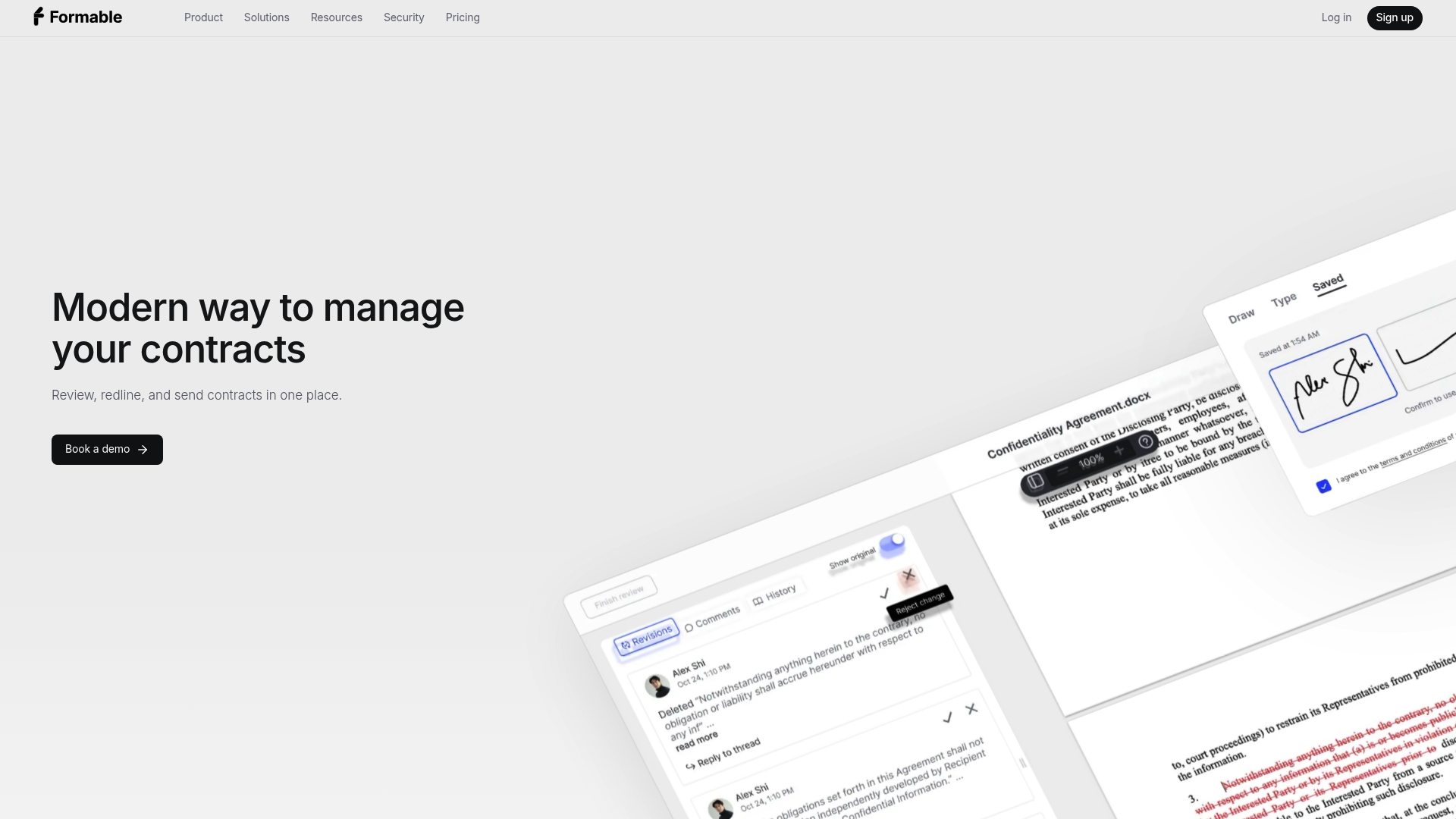
If you want the next verbal yes to become a signed agreement before the call is over, start at formabledocs.com.
Our perspective
The question "is it binding?" is usually the wrong one to be asking. The better question is "can I prove it?"
Most of the deals we see teams care about are not exotic. They are pilots, order forms, SOWs and NDAs that someone agreed to on a call. The law will often recognize those agreements. But recognition takes litigation, and litigation takes months and money that a startup would rather spend building.
We think the answer is to remove the gap between the conversation and the signature. When drafting, review, negotiation and signing live in one workflow, a verbal yes becomes a signed agreement in the same working session. The audit trail comes for free, and nobody has to reconstruct who said what.
That is why we built Formable as a single flow: create the agreement, review it with AI against your playbook, negotiate the redlines, collect signatures and keep the record. Speed and protection should not be a trade-off.
Alex
FAQ
Is a verbal agreement legally binding in California?
Yes, in general. California's Civil Code says that all contracts may be oral unless a statute requires a writing. Real-property sales, long-term leases and agreements that cannot be performed within one year are among the categories that do require one. Whether a particular deal is enforceable depends on its facts, so consult a California attorney for your situation.
Can you sue over a verbal agreement?
Yes, if a valid contract was formed and no writing requirement blocks it. You must prove the terms, your performance, the breach and your losses, and the burden is on you as the party seeking enforcement. Evidence such as emails, invoices, payments and witness testimony is what courts rely on.
What contracts must be in writing?
The list depends on the state, but it commonly includes real-property sales, long-term leases, agreements not performable within a year, promises to pay another's debt, and sales of goods of $500 or more under the UCC. The writing must be signed by the party against whom enforcement is sought.
Are text messages enough to make a contract?
For some deals they can be evidence of an agreement. For real property in California, though, a text or instant message not designed to be retained is not enough on its own. Even where texts count, they tend to leave terms vague, which makes them a weak basis for anything important.
Can you pull out of a verbal agreement?
Not simply because you changed your mind, if the agreement is enforceable. If it is a type of deal that requires a signed writing and none exists, the party who has not signed may be able to decline to perform. A lawyer can tell you which situation you are in.
Sources
- CACI No. 304, Oral or Written Contract Terms
- California Civil Code section 1622
- California Civil Code section 1624
- California AB 2136, statute of frauds
- Cornell LII, express contract
- Cornell LII, oral contract
- Cornell LII, contract
- UCC section 2-201, formal requirements and statute of frauds
- Contract formation and enforcement in the United States, 2025 overview
- Proving an oral contract in court, Itkin Law