Contract first: PoC vs pilot checklist for legal teams

Alex Shi

A proof of concept proves technical feasibility in a short, focused test. A pilot proves operational value inside live business workflows over a longer stretch. Run a PoC when you have real technical uncertainty. Run a pilot once the product works and you need to validate adoption, ROI, and fit before signing a full contract.
TL;DR:
- A proof of concept focuses on technical feasibility within a limited timeframe and usually involves a small engineering effort in a sandbox environment.
- A pilot assesses real-world value by testing the product across multiple departments and workflows for up to three months, involving broader team resources and live data.
- Proper contractual clauses for pilots include clear scope, success metrics, exit conditions, data security agreements, and a predefined conversion path to a full contract.
- Running a PoC is essential when technical uncertainty exists, while skipping directly to a pilot is appropriate once the product is feature-complete and the only question is operational fit.
- Using templates and contract tools that facilitate quick, AI-assisted negotiation and signing reduces delays and helps prevent pilot drift or scope mismatches.
Table of Contents
- Pilot agreement vs poc: what each term actually means
- Comparing scope, timeline, and risk side by side
- When to run a PoC vs a pilot: a quick checklist
- The clauses every pilot agreement needs before kickoff
- Running the test without losing momentum
- How contract tools speed up PoC and pilot paperwork
- A contract-first take on PoC vs pilot decisions
- Draft pilot agreements without starting from a blank page
- Where to go for deeper drafting guidance
- Sources
- FAQ
Pilot agreement vs poc: what each term actually means
The confusion starts with vocabulary, and the vocabulary matters more than most teams assume. A proof of concept (PoC) is a narrow technical exercise, typically running 2 to 8 weeks, built to answer one question: can this actually work in our environment? A pilot is a longer operational test, usually 30 to 90 days, designed to answer a different question: does this deliver measurable value once real people use it in real workflows, according to guidance from rework.
The overlap in casual usage is where the trouble starts.
- A PoC is often unpaid, limited to a sandbox environment, and run by an engineering team alone.
- A pilot usually involves live data, multiple departments, and a signed agreement with defined obligations.
- Sales teams frequently call an unpaid trial a "pilot" to make it sound more serious, and that mislabeling creates real legal exposure later.
- Vendors sometimes push straight into a pilot to skip the slower feasibility work, then discover mid-pilot that the integration does not actually function.
Calling both stages "the pilot" internally is convenient shorthand. Doing it in a signed contract is a mistake that costs someone leverage six weeks in.
Comparing scope, timeline, and risk side by side
The two exercises differ on every dimension that matters to a contract: what question you're answering, how much of the business is exposed, and who owns the outcome.
A PoC asks "can it work?" A pilot asks "does it work for us, and is it worth paying for?" That single distinction should drive the scope of everything else, from who signs off internally to what the paperwork says.
| Dimension | Proof of concept | Pilot |
|---|---|---|
| Objective | Can it work? (feasibility) | Does it deliver value? (adoption, ROI) |
| Scope | Isolated prototype or test environment | Integrated into real business processes |
| Timeline | Several weeks up to two months | Several weeks up to around three months |
| Expected output | Technical artifact, feasibility report | Usage data, KPI results, ROI evidence |
| Resourcing | Engineering spike, small technical team | Cross-functional team: IT, end users, data owners |
| Risk/exposure | Low, usually sandboxed data | Higher, live data and workflow dependency |
Resourcing shifts the risk profile more than people expect. A PoC ties up one or two engineers for a few weeks. A pilot pulls in IT, a data owner, actual end users, and often someone from legal, because real customer or operational data is now flowing through an unproven vendor relationship. That's exactly why LegalClarity's breakdown of PoC agreement clauses treats PoC contracts as narrower, shorter, and cheaper than pilot contracts. Mislabeling one as the other, while attaching pilot-level obligations to a PoC-scale test, creates mismatched commitments neither side agreed to.
When to run a PoC vs a pilot: a quick checklist
Run this checklist before you draft anything:
- Is there a genuine technical unknown? If integration behavior, data compatibility, or model accuracy is unverified, start with a PoC.
- Is the product already feature complete for your use case? If yes, and the open question is adoption or ROI, skip straight to a pilot.
- Do you have 30 to 90 days and cross-functional bandwidth? Pilots need IT support, end-user time, and a data owner, not just an engineer.
- Are there compliance or data-residency requirements? If sensitive data will flow through the vendor, that alone argues for a pilot with a signed data processing agreement rather than an informal test.
- Has a technical unknown already been resolved? If a PoC already proved feasibility, jumping straight to a pilot avoids wasting another cycle re-testing what you already know.
Sequencing matters here: PoC first when technical risk is real, pilot first (or only) when the product is proven and the open question is operational fit, a key insight in why brands should use SaaS SEO.
The clauses every pilot agreement needs before kickoff
A pilot agreement is a short-term contract, and it needs the same rigor as any commercial deal, just scoped to a shorter window, according to LegalClarity's guide to pilot agreement terms. Before either side signs, the agreement should nail down:
- Scope and access: exactly what systems, data, or environments the vendor can touch, and for how long.
- Success criteria: measurable KPIs, who measures them, and what evidence counts as proof (usage logs, survey data, cost figures).
- Duration and exit terms: fixed start and end dates, a data export window, and clear conditions for early termination.
- Fees and cost allocation: who pays for what, when payment is due, and what happens to unpaid work if the pilot ends early.
- IP and feedback rights: whether the vendor licenses or owns configurations, and who owns feedback or custom work built during the test.
- Confidentiality and data protection: standard NDA language plus, if personal data is involved, a signed data processing agreement.
- Liability and support: liability caps, indemnities, and what support level the vendor commits to during the test window.
- Conversion path: pre-agreed terms for moving into a full commercial agreement, paired with explicit non-binding language so the pilot doesn't create an implied obligation to buy.
Pro Tip: Never sign a pilot without a stated conversion path. A pilot with no pre-negotiated pricing or terms for the "yes" scenario tends to drag into a second, third, and fourth negotiation round right when momentum is highest.
Templates that already include these clauses, like a pilot agreement template, save both sides from re-drafting boilerplate every time.
Running the test without losing momentum
A pilot without a named owner on each side drifts. Assign a dedicated lead internally and require the vendor to name one too, with a stated weekly time commitment from both.
- Set KPIs and checkpoints before day one. Decide who assesses success, what data proves it, and when you'll review progress (weekly or biweekly, not just at the end).
- Resource it properly. Line up IT, integration owners, and actual end users before the clock starts, not after week two when you realize nobody has login access.
- Build in a conversion trigger. Define what result automatically opens commercial conversations, so a good pilot doesn't stall waiting for someone to schedule a meeting.
- Collect both numbers and opinions. Usage data tells you what happened. End-user interviews tell you why, and why matters more when the numbers are ambiguous.
Pro Tip: Treating a pilot as a free trial usually backfires. A paid pilot, even a discounted one, signals commitment on both sides and tends to pull in more internal resources and better data, which is exactly what a real decision needs.
Without a pre-agreed conversion path and a named sponsor on both sides, even a technically successful pilot can stall indefinitely, a pattern often called pilot drift.

How contract tools speed up PoC and pilot paperwork
Negotiating a pilot agreement from scratch eats weeks that should be spent testing. Templates built specifically for pilot agreements and PoC contracts remove most of that redrafting cycle.
- AI-assisted contract review flags missing clauses, like an absent conversion path or an undefined success metric, before either side signs.
- Real-time redlining keeps IP, data, and confidentiality language aligned to a playbook instead of drifting across email threads.
- E-signing and embedded APIs let both sides execute the agreement the moment terms are settled, with a timestamped audit trail attached.
- Tracking built into the workflow keeps data export windows and conversion deadlines visible, instead of buried in a PDF nobody reopens.
A contract-first take on PoC vs pilot decisions
Most failed pilots aren't a product problem. They're a paperwork problem: no success metric was agreed on, no conversion trigger was written down, and nobody owned the exit. Run a PoC when the technology is genuinely unproven. Run a pilot when it's ready and you need real usage data. Either way, contract the exit before you contract the start.
— Alex
Draft pilot agreements without starting from a blank page
Some contract tools put the clause checklist above directly into a working document instead of leaving it as a mental note for legal teams. Instead of assembling scope, IP, and conversion language by hand with a generic word processor, such tools may start from a pilot-ready structure and include AI-assisted review to flag missing success-criteria clauses or undefined exit dates before sending.
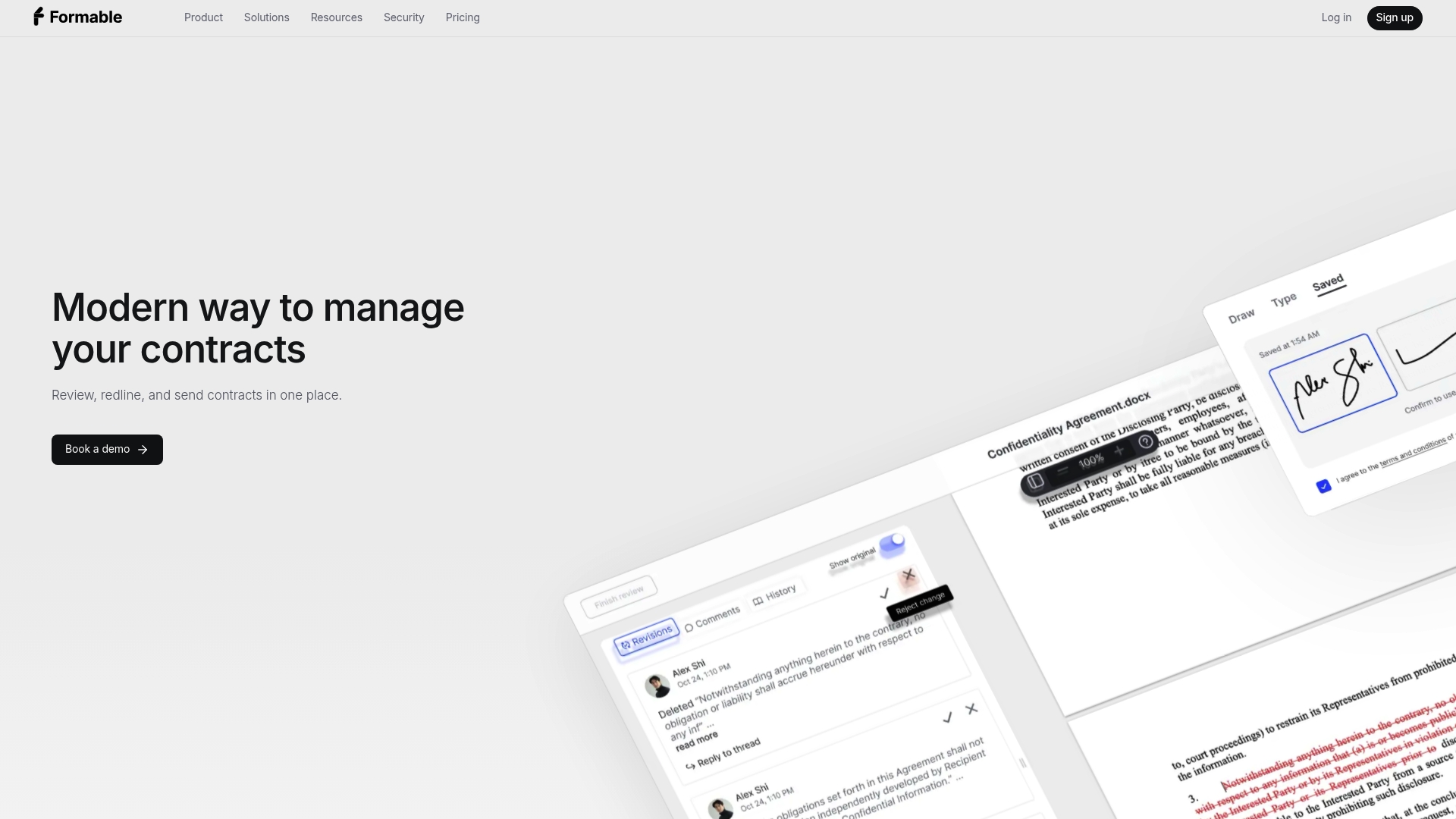
Redlining happens in the same browser tab both sides negotiate in, so a pilot agreement that used to take three email rounds can close in one sitting. Once terms are locked, e-signing and audit trails close out the paperwork without a separate tool. Start from a pilot agreement template, build one from scratch with the contract creator, or check the Pro plan at $29.99 a month if you're running pilots often enough to need it as a habit, not a one-off scramble.
Where to go for deeper drafting guidance
For clause-level detail beyond this checklist, these sources are worth bookmarking:
Sources
- rework — poc & pilot programs guidance
- LegalClarity — what is a pilot agreement? key terms and provisions
- LegalClarity — proof of concept agreement: key clauses and legal issues
FAQ
What is the difference between a pilot and a PoC?
A PoC tests whether something is technically possible, usually in 2 to 8 weeks in a limited environment. A pilot tests whether it delivers real value in live workflows, typically over 30 to 90 days, with broader team involvement.
What comes first, PoC or pilot?
The PoC comes first when technical feasibility is genuinely uncertain. If the product is already proven and feature complete, teams often skip straight to a pilot rather than repeat validation that's already settled.
What is a pilot agreement for taxes?
"Pilot agreement" in a tax context usually refers to a payment-in-lieu-of-taxes arrangement between a business and a local government, which is unrelated to a technology pilot agreement. In business and technology contexts, a pilot agreement is a short-term contract governing a live operational test of a product or service.
What does "PoC agreement" mean?
A PoC agreement is a contract covering a narrow, short-term technical validation, typically with tighter scope, shorter duration, and lower fees than a pilot contract. It usually skips the operational and adoption metrics a pilot agreement requires.
Do I need a separate contract for a PoC and a pilot?
Yes, in most cases. A PoC agreement and a pilot agreement carry different scope, fees, and risk exposure, so using one document for both stages tends to create mismatched obligations. Templates built specifically for pilot agreements help keep the two stages properly separated.