
The fastest way to lock in a wedding booking is to send a finished photography contract through e-signature, not as a PDF attachment in a long email thread. Prefill the couple's names, wedding date, venue, package, and deposit. Add signature and date fields for both partners. Set a deadline, turn on reminders, and archive the signed copy with an audit trail as soon as it comes back.
TL;DR:
- A wedding photography contract should name the couple, date, venues, coverage hours, package, deposit, cancellation terms, image delivery, and who owns the photos.
- Prefill every field you already know so the couple is reviewing terms, not filling out a blank form on their phones.
- Collect signatures from both partners when both are paying or making decisions. Parallel signing is faster than waiting for one person to finish first.
- Do not mark the date as booked until the contract is signed and the retainer clears.
- Store the signed PDF and the audit certificate together. Wedding disputes often show up months later, during album delivery or a cancellation.
What belongs in a wedding photography contract?
A wedding photography contract is a services agreement for one event. It should be specific enough that a planner, parent, or venue coordinator can read it and know exactly what you are covering. Vague package names are how "full day" turns into a dispute about whether the getting-ready hotel was included.
Include these items before you send anything:
- Parties. Full legal names for you (or your studio) and both clients, plus emails and phone numbers you will actually use on the wedding day.
- Event details. Wedding date, ceremony and reception venues, coverage start and end times, and any extra locations (first look, portraits, after-party).
- Package and deliverables. Hours of coverage, second shooter if included, estimated image count, delivery format, and the timeline for the gallery.
- Fees and payment. Total package price, retainer amount, remaining balance due date, accepted payment methods, and what happens if a payment is late.
- Cancellation and postponement. Who keeps the retainer, how a date change is handled, and how much notice is required.
- Image rights. Who may post, print, or sell the photos, and whether you retain copyright and portfolio rights.
- Client responsibilities. Family shot list deadline, meal for the photographer, and a point of contact on the day.
- Signature blocks. One for you and one for each client who is agreeing to pay or make changes.
If you work with a second shooter as a contractor, that is a separate agreement. Do not bury second-shooter terms inside the couple's contract. The couple needs to know whether a second photographer is included. The contractor needs their own scope, pay, and image-rights terms.
Pro Tip: Attach the shot list, timeline, and package description as numbered exhibits. If the couple later says a parent portrait or sparkler exit was included, you want that list inside the signed file, not in a text thread from eight months earlier.
How to send the contract for signing
Treat sending as its own workflow. Most delays happen because the document is unfinished, not because the couple is unwilling to book.
- Lock a final PDF. Export the contract after the package, date, and price are confirmed. Do not send a Word file the couple can accidentally edit.
- Prefill known fields. Couple names, wedding date, venues, package name, hours, total, retainer, and your studio details should already be filled in.
- Place signature and date fields. Add a signature and date line for you and for each client. Put the total and retainer amount on the same page as the signature block so nobody has to hunt for the number.
- Add both partner emails. If both names are on the contract, both should receive a signing link. Ask during the booking call who else needs to sign, a parent paying the retainer, for example.
- Set a deadline and reminders. Give the couple a clear window, often 3 to 7 days, and schedule reminders before the hold on the date expires.
- Send from an e-signature tool. A dedicated signing link records who opened the document, when they signed, and from where. An emailed PDF does not.
- Download the signed PDF and the audit certificate. File both under the wedding date and couple name before you send a retainer invoice or confirm the date with the venue.
Adobe's request-signature flow follows the same pattern: upload, add fields, send, and track. Couples can usually sign from a phone without creating an account, which matters when one partner is traveling or buried in venue emails.
Preview the document on a phone before you send it. Wedding clients often open the link on mobile. Tiny tables, stacked fee schedules, and signature fields that sit under a footer are the usual reasons someone stalls halfway through.
Who needs to sign, and in what order?
Default to both partners signing, in parallel. Sequential signing only helps when one person must approve terms before the other sees them, which is rare for a wedding booking.
- Both partners. Use this whenever both names are on the invoice, both are making planning decisions, or a parent is not the only payer.
- One partner plus a parent or planner. If a parent is paying the retainer, add them as a signer on the payment section or as a third signer on the full contract. Do not rely on a verbal "my mom will Venmo you."
- You, the photographer. Countersign after the couple, or in parallel if your terms are already locked. Your signature shows the studio accepted the same date, hours, and fee.
Ask one question on the booking call: "Who else needs to review or sign this?" That question prevents you from discovering a parent or planner three days after you thought the date was booked.
If the couple wants a small change, such as adding an hour or a second shooter, send a short written amendment or an updated contract. Do not treat a text message as the new agreement. The signed file is what you will look at if the wedding is postponed or the gallery is disputed.
Deposits, cancellation, and date holds
The retainer is what makes the date real. A signed contract with no payment still leaves the date exposed if another couple wants the same Saturday.
State these rules in the contract, then repeat them in the signing email:
- The date is held only after the contract is signed and the retainer is received
- The retainer amount and the remaining balance due date, often 30 days before the wedding
- What happens if the couple postpones versus cancels
- Whether travel fees, second-shooter fees, or album fees are refundable
- How weather, venue changes, or a government restriction is handled
Electronic signatures on these agreements are enforceable in the United States under the ESIGN Act and UETA when the couple consents to sign electronically and the platform keeps an audit trail. That record matters if a cancellation later turns into a disagreement about whether they actually booked you.
Pro Tip: Do not mark the calendar as booked from a "we are so excited, sending payment soon" email. Wait for the signed contract and the retainer, then send a short confirmation with the wedding date, hours, and remaining balance due date.
What happens after the couple signs?
An executed wedding contract that lives only in your downloads folder is hard to find when you need it, usually the week before the wedding or six months later when the album is due.
- Store the signed PDF and audit certificate with the couple name, wedding date, and package
- Send a confirmation that restates hours, venues, retainer received, and the next payment date
- Add the wedding to your calendar only after those two files are saved
- Collect the shot list and timeline closer to the date, and keep those as attachments rather than rewriting the contract
- If the couple later upgrades the package, send a one-page amendment and get it signed the same way
Keep the audit trail with the contract. If someone later claims they never agreed to a travel fee or a limited print-release, the signing record is the evidence, not your memory of the booking call.
Common mistakes when sending wedding contracts
Sending a blank template. If the couple has to type their own wedding date and package, they will delay or type the wrong venue.
Only one partner on the signature line. The person who did not sign is the person who later questions hours, albums, or cancellation terms.
No deadline. A contract sitting in an inbox through peak planning season is how you lose the date to another inquiry.
Editing after they sign. Changing hours or fees in the PDF after signature, even to "fix a typo," weakens the record. Send an amendment instead.
Releasing the date before the retainer clears. A signed contract without payment is not a booked wedding.
Forgetting mobile. Couples sign from their phones. If the signature field is hard to tap, they will close the tab and you will wait another week.
— Alex
Send your next wedding contract through Formable
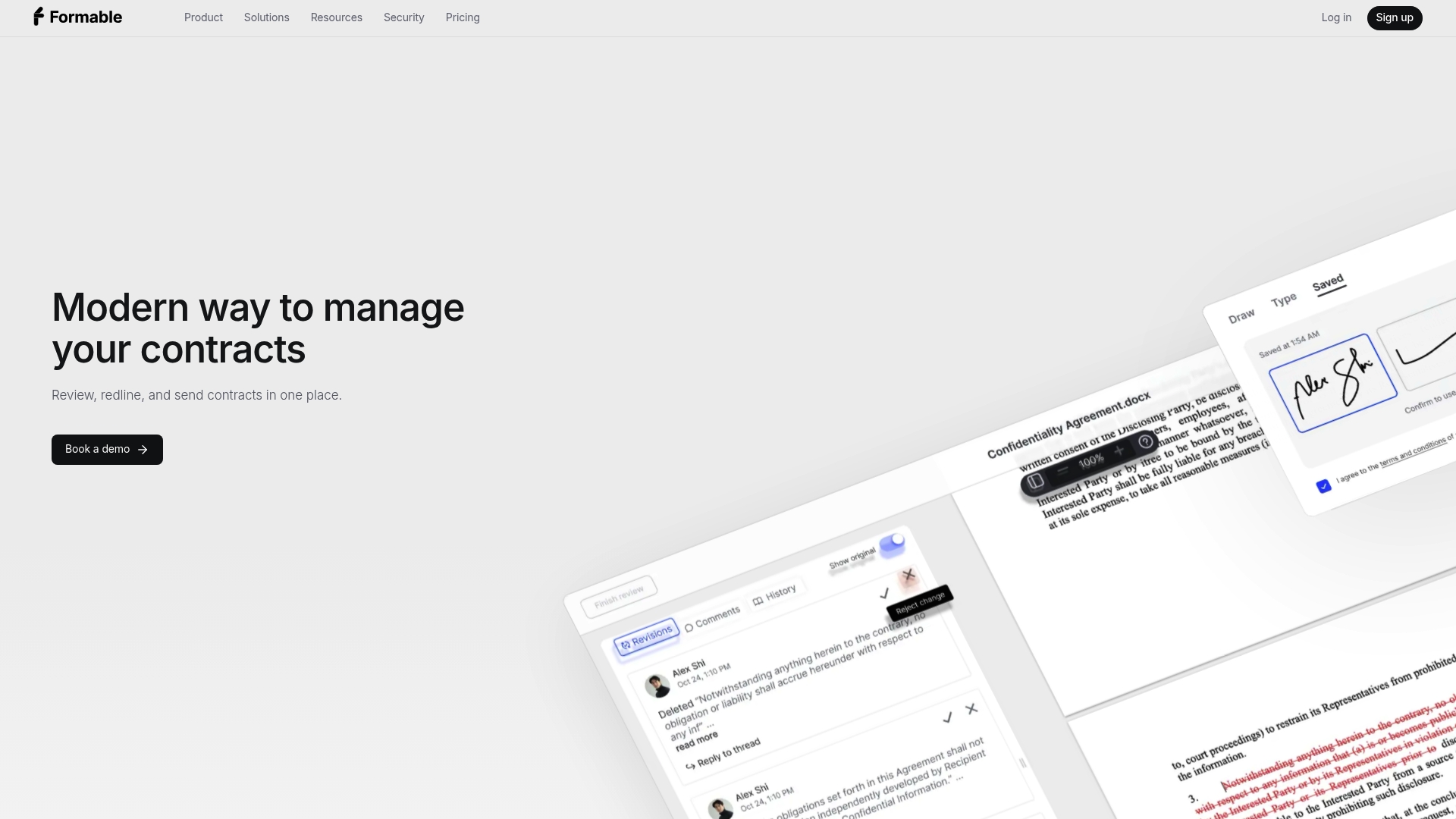
Formable lets you upload the photography contract you already use, place signature and date fields for both partners, and send a signing link with reminders. You get a completed PDF plus a timestamped audit trail instead of a scanned page from someone's printer.
If a couple asks for a change after they review the terms, keep the conversation in one document rather than a new email attachment. When the contract is final, e-signing collects both signatures and stores the executed copy where you can find it by wedding date. Start with your next inquiry: lock the PDF, add the couple as signers, and send it before you hold the Saturday.
Sources
- Send PDF for signature: Request signature on PDF files | Acrobat
- How to Send a Contract via Email: Prep, Send, and Track - LegalClarity
- The best digital signature apps (Zapier)
FAQ
How can I send a photography contract to a wedding client for signing?
Lock a final PDF, prefill the couple, date, venue, and package, add signature fields for both partners, and send the document through an e-signature tool with a deadline and reminders.
Do both partners need to sign a wedding photography contract?
Yes, if both names are on the booking or both are paying. Add a parent or planner as a signer when they are paying the retainer or approving changes.
Is an electronically signed wedding contract legally binding?
Yes. In the United States, electronic signatures are enforceable under the ESIGN Act and UETA when the couple consents to sign electronically and the platform keeps an audit trail.
When should I mark the wedding date as booked?
After the contract is signed and the retainer has cleared. A verbal yes or an unsigned PDF should not hold the date.
What should I do if the couple does not sign?
Check whether they opened the link, send a reminder that restates the hold expiration, and offer to walk through any clause they flagged. If they want different hours or fees, update the contract and resend rather than negotiating only in text messages.
What should I save after the couple signs?
Keep the signed PDF and the audit certificate together, named with the couple and wedding date, plus a confirmation of the retainer and remaining balance due date.