Building e-signing in-house is justified only when you need deep product-native signing flows, handle very high signature volumes, or face compliance demands a standard vendor cannot meet. For most product and engineering teams, the control gained rarely offsets the ongoing legal, security, and maintenance burden. Embedding a proven provider like Formable's embedded e-signing API gets you to production faster with the audit trail already built.
TL;DR:
- One practitioner estimate places the economic tipping point at several thousand signatures annually; below that, vendor fees usually cost less than building and maintaining infrastructure.
- U.S. law requires consent, access disclosures, document access, and reproducible records; defensible audit trails also preserve timestamps, IP addresses, displayed consent language, and viewing confirmation.
- A usable internal flow takes one to two quarters; production hardening adds at least another quarter for audit logs, key management, validation, and security review.
- EU signers or EU data storage bring GDPR duties, while qualified eIDAS signatures require a certified trust provider and hardware based identity verification.
Build vs buy: the trade-offs that actually matter
The build decision usually comes down to three tensions, not a simple feature checklist.
Speed to market is the first casualty of building. A vendor integration can be live in days. A homegrown signing service, hardened enough for legal defensibility, takes months of focused engineering time before it is trustworthy in production.
Control over the data model is the real reason teams consider building. If your product needs signing fields woven directly into a proprietary document format, or your audit events need to live inside your own data warehouse for downstream analytics, a vendor's black box can feel limiting.
Vendor lock-in concerns are legitimate but often overstated. Most providers export signed PDFs and audit records in open formats, so switching later is rarely the trap people imagine. The bigger risk is building something that technically works but lacks the legal rigor to survive a dispute.
A few conditions tend to justify building:
- Your product requires signing UX that cannot be embedded or white-labeled by any vendor.
- You operate at a volume where per-signature vendor fees meaningfully erode margin.
- You have a dedicated compliance or security team that can own key management and long-term validation indefinitely.
For nearly everyone else, buying wins on speed and reduces the surface area your team has to defend later.
The components you actually have to build
An e-signing service is not one feature. It is a stack of interlocking systems, each with its own failure modes.
- Document generation and templating. You need a reliable way to render PDFs with precise field placement for signatures, initials, and dates, across varying document lengths and formats.
- Signer authentication and consent capture. This includes identity verification (email link, SMS code, or stronger methods) and a clear, logged moment where the signer affirmatively agrees to sign electronically.
- Signature capture. Typed names, drawn images, or PKI-based cryptographic signatures all require different handling and different evidentiary weight later.
- PDF sealing and cryptographic hashing. Once signed, the document needs a cryptographic hash and a sealed, tamper-evident state, following PAdES digital signature profiles so the seal remains verifiable years later.
- Audit trail architecture. The strongest pattern is an append-only event log: timestamp, IP address, consent language shown, and access confirmations, kept separate from the sealed document itself so evidence can be reconstructed independently.
- Key management. Signing keys belong in a cloud KMS or hardware security module, never in application code, with certificate rotation and revocation handling built in from day one.
- Long-term validation. RFC 3161 timestamping and OCSP checks protect against a scenario where a certificate expires or gets revoked after a signature was valid, which would otherwise undermine an old document's enforceability.
- APIs, webhooks, and storage. You need endpoints for envelope creation, signer status, and completion events, plus a retention policy that satisfies both legal holds and storage cost realities.
A practical reference implementation often looks like a signing microservice built on a framework such as Spring Boot, backed by cloud blob storage and an external certificate authority for signing certs, a pattern documented in one engineering team's build. Our own engineering guide to implementing e-signing walks through similar architecture decisions from the integration side.
Pro Tip: Design your audit trail as a separate, append-only event store from the start. Retrofitting evidentiary integrity onto a system that was not built for it is far harder than building it in from day one.
What U.S. law actually requires for a defensible signature
The ESIGN Act is the baseline. It states that a signature, contract, or record relating to interstate commerce cannot be denied legal effect solely because it is electronic. That is good news for builders, but the Act attaches real obligations.
Your system needs to:
- Capture affirmative, informed consent from the signer to use an electronic signature instead of paper.
- Disclose the hardware and software requirements needed to access and retain the signed record.
- Confirm the signer can actually access the document in the form it will be provided, before the signature is finalized.
- Preserve the signed record in a form that can be accurately reproduced later for all parties.
Courts and opposing counsel in a dispute typically expect specific audit fields: a precise timestamp, the signer's IP address, the exact consent language displayed at the moment of signing, and confirmation that the signer opened and viewed the document. A system missing any of these weakens the evidentiary chain. Our audit trail documentation breaks down how each event type contributes to that chain.
One-off estimate from the e-signature industry: the cost tipping point where building becomes economically sensible sits around several thousand signatures per year, according to one practitioner analysis. Below that volume, vendor pricing almost always beats the engineering cost of building and maintaining your own system.
Not every signature belongs on an electronic platform. Wills, certain family law documents, and some notarized instruments fall outside standard e-signature coverage and require wet-ink signatures or qualified electronic notarization instead. Build your intake flow to flag these document types and route them to the appropriate process rather than assuming every contract qualifies.
What building really costs, month over month
The upfront engineering estimate is only the first bill. Teams consistently underestimate what it takes to keep a signing system compliant and secure once it is live.
- MVP build: a basic signing flow with document rendering, consent capture, and a sealed PDF typically takes a dedicated engineering team one to two quarters to reach something usable internally.
- Production hardening: adding proper audit trail architecture, key management through a KMS or HSM, long-term validation, and security review usually adds another quarter or more before the system is defensible enough for real contracts.
- Ongoing costs: certificate renewal fees, timestamping service costs, on-call incident response for signing failures, and periodic legal review of your consent language and retention policy all recur indefinitely.
- Developer time: someone on your team now owns this system permanently, which means every new compliance requirement or platform change competes for roadmap time against your actual product.
The hidden costs tend to surface during a dispute or audit, not during development. E-discovery support, where you have to produce and authenticate signed records for litigation, and periodic compliance reviews of your signing flow, both require specialized expertise that most product teams do not have in-house. A self-hosted open-source signing engine can get a proof of concept running quickly, but the gap between a working prototype and a system that survives a subpoena is where most of the real cost lives.
A 15-minute framework to decide build or buy
Score each criterion honestly before committing engineering time to either path.
- Volume: are you sending fewer than a few thousand signatures a year? If yes, buying almost always wins on cost.
- UX requirement: does your product need signing embedded invisibly inside your own interface, with no vendor branding or redirect? If yes, weigh building more seriously.
- Legal and regulatory need: does your industry require signature types or retention rules no vendor currently supports? If yes, building may be necessary, but confirm first.
- Data residency: must signed records stay in a specific jurisdiction or storage environment your current vendors cannot guarantee? If yes, that is a real building argument.
- Internal expertise: do you have engineers who can own key management and legal compliance indefinitely, not just for the initial build? If no, buying is the safer default.
| Criterion | Favors build | Favors buy |
|---|---|---|
| Annual signature volume | Tens of thousands or more | A few thousand or fewer |
| UX embedding depth | Fully native, invisible | Standard embedded flow acceptable |
| Compliance complexity | Highly specialized, unmet by vendors | Standard commercial contracts |
| Internal team bandwidth | Dedicated compliance engineering | Lean product and engineering team |
If the scorecard favors buy, the fastest path is integrating an embedded signing API and migrating existing templates over a short pilot window. If it favors build, scope the MVP to document generation, consent capture, and a sealed PDF first, then treat audit trail hardening and key management as a required second phase, not an afterthought.
How Formable supports embedded signing without the build
We built our embedded e-signing API so developer teams can add signing to their own product without owning the legal and cryptographic infrastructure behind it. Every signed document carries a complete audit trail, and our security page details how we handle consent capture and record retention to support legal defensibility.
Beyond signing, some providers offer browser-native redlining and AI-powered contract review, so teams negotiating terms before signature stay in one workflow instead of stitching together separate tools. For a sense of how different API architectures compare, our API comparison guide walks through the integration patterns developer teams typically choose between.
Handling multi-party and sequential signing
Most real contracts involve more than one signer, and the order often matters. Sequential signing, where one party must sign before the next is notified, requires your system to track signer state and only release the next signing link once the prior step completes. Parallel signing, where all parties can sign simultaneously, needs a completion check that waits for every signature before sealing the final document.

Both patterns need careful handling of partial completion. If one signer abandons the process, you need a clear policy: does the envelope expire, and who gets notified? Your audit trail also needs to capture signing order explicitly, since a dispute over sequence (did the vendor sign before or after the client agreed to a revised term) can matter as much as the signatures themselves.
For routing logic, decide upfront whether a signer's role determines order automatically or whether senders set it manually per document. Building this correctly means handling edge cases like a signer delegating to someone else, or a party needing to countersign after revisions, both of which complicate a basic linear workflow more than teams expect going in.
Compliance beyond U.S. law
If any signer, document, or data storage touches the European Union, GDPR governs how you handle personal data embedded in signed documents, including names, email addresses, and IP addresses captured in your audit trail. That means data minimization, clear retention limits, and a lawful basis for processing, on top of the consent requirements ESIGN already demands domestically.
The EU's eIDAS regulation also defines tiers of electronic signatures, from simple to qualified, with different legal weight depending on the tier. A standard e-signature built for U.S. ESIGN compliance will likely satisfy eIDAS's basic tier, but qualified electronic signatures require a certified trust service provider and hardware-backed identity verification that most in-house builds cannot replicate.
If your contracts never touch EU signers or EU-resident data, this layer may not apply, but confirm that before assuming your U.S.-focused build covers every counterparty. Teams handling AI-driven contract review or automation on top of their signing flow should also build in deliberate security review steps. A useful external reference here is this AI procurement security checklist from tekRESCUE AI, which outlines questions worth asking before layering AI tooling into any compliance-sensitive workflow.
A practical take on build versus buy
Long-term ownership of a signing system makes sense when it is core to what you sell, not when it is a utility your product merely needs. Most teams discover that building becomes a parallel infrastructure project competing for the same engineers your actual roadmap needs.
Our practical staging recommendation: embed a vendor's signing API first, but insist on open export formats and a documented migration path. That keeps the door open without forcing a costly build before you know you need one.
— Alex
Try embedded signing before you commit to building
If the framework above points toward buy, the fastest way to validate that is a short pilot rather than a long procurement process. Map your checklist directly to what we offer: the embedded signing API covers the signer consent and sealed PDF requirements, the audit trail covers the evidentiary fields counsel expects, and browser-native redlining and AI contract review cover everything that happens before signature.
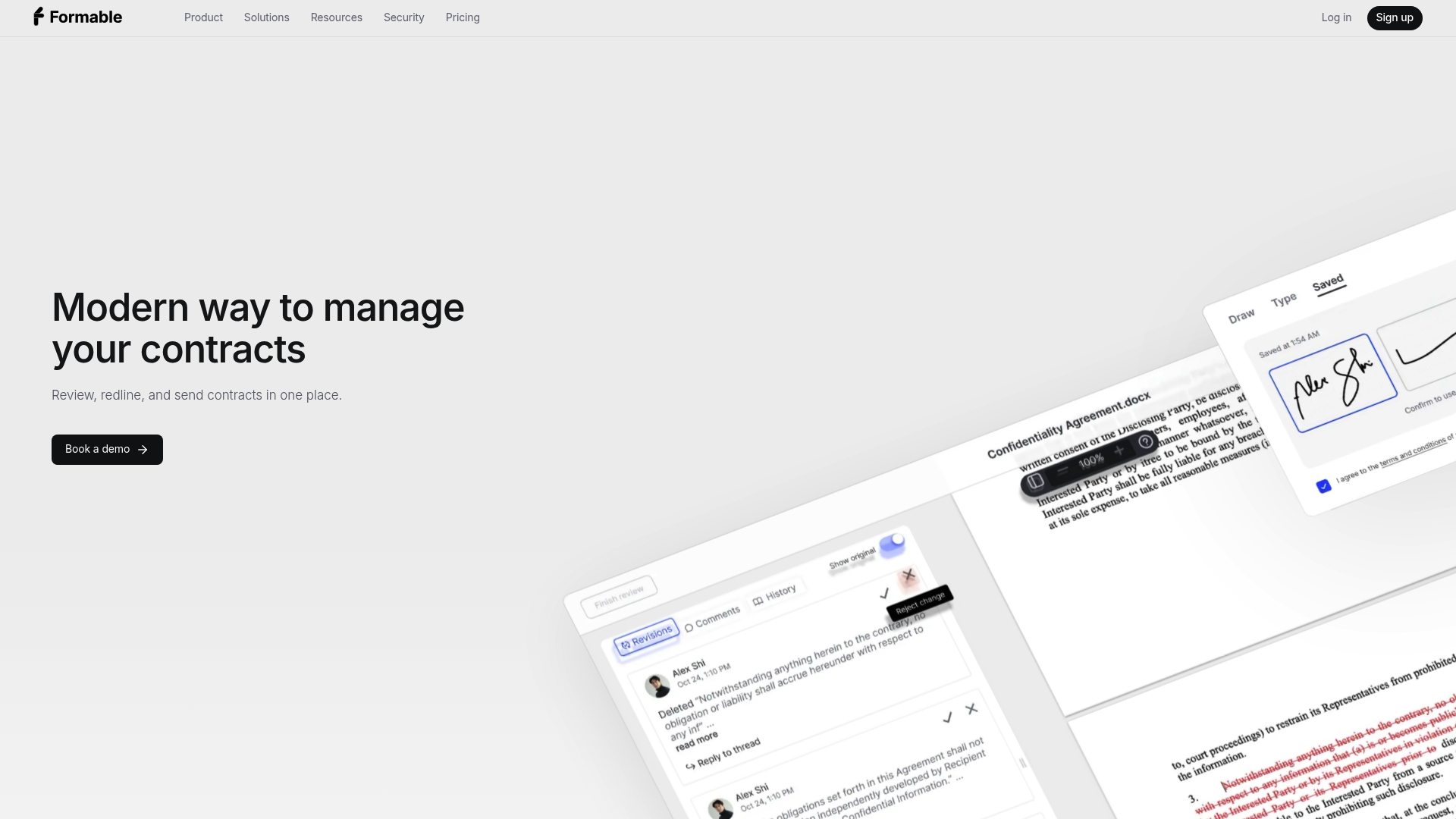
A sensible pilot: integrate the embedded signing API into one contract type and track developer hours spent versus a projected in-house build, alongside your per-signature cost, over a 30 to 90 day window. Our guide to proving e-signature API ROI walks through how teams typically structure that comparison.
- Review pricing for Pro at $29.99 per month or Developer and Growth plans for API-based integration, with Growth also at $29.99 per month.
- Explore the embedded signing documentation to estimate integration effort against your own roadmap.
- Compare your current signing costs against an Adobe Sign alternative built for developers.
Start by reviewing our pricing page and request a walkthrough for your specific contract volume and compliance needs.
This article is general information, not a substitute for advice from a qualified lawyer. Consult a qualified legal professional about your own circumstances before acting on anything here.
FAQ
How do I create my own e-signature?
Creating a personal electronic signature on a document usually means typing your name, drawing it with a mouse or finger, or uploading an image of your handwritten signature into a signing tool. Building an organization-wide signing capability is a different scope entirely, requiring the authentication, consent capture, and audit trail infrastructure described earlier in this article.
Is the eSign legally binding?
Yes, under the ESIGN Act, an electronic signature on a record relating to interstate commerce cannot be denied legal effect solely because it is electronic. Binding status still depends on proper consent capture, disclosure of access requirements, and record retention, which is why the underlying system's audit trail matters as much as the signature itself.
What are the four requirements for an electronic signature to be valid?
Under U.S. law, a valid electronic signature generally requires the signer's clear intent to sign, affirmative consent to use an electronic method, a reliable association between the signature and the signed record, and retention of the record in a form that can be accurately reproduced later. Each requirement maps directly to specific audit trail fields your signing system needs to capture.
How do I set up an electronic signature?
For personal use, most document viewers and signing tools let you type, draw, or upload a signature image directly onto a PDF. For a business workflow at scale, setting this up means either integrating a vendor's signing API, such as our embedded e-signing API, or building the document generation, consent capture, and audit trail infrastructure described in the implementation section above.